Our top pick
Best HRV Tracker
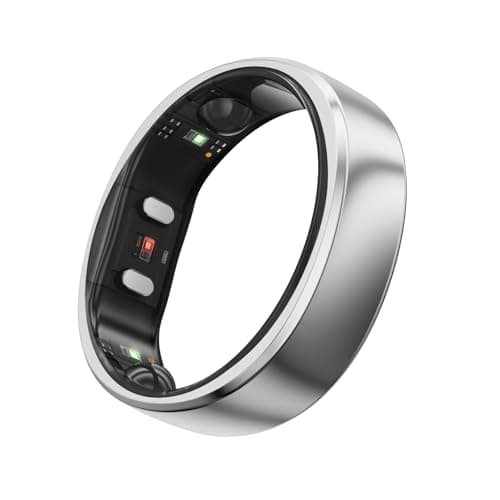
Overnight HRV with no subscription of any kind, 10-12 days a charge, and the only no-fee device here with a chest-strap comparison of its own.
#ad · Price as of November 29, 2026 · How we make money for the link to RingConn Gen 2
Quick picks
The picks at a glance
| # | Product | Best for | Score | Price |
|---|---|---|---|---|
| 1 | RingConn Gen 2 Overnight HRV with no subscription of any kind, 10-12 days a charge, and the only no-fee device here with a chest-strap comparison of its own. | Best HRV tracker overallNo subscription | 9.5/10Researched | $209.30Amazon #ad · Disclosure |
| 2 | 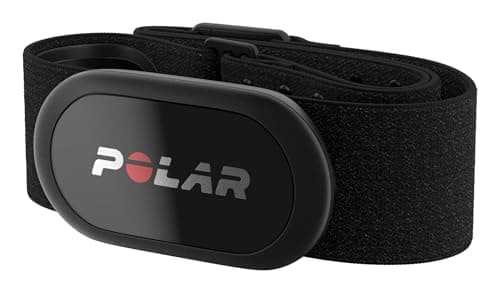 Polar H10 The criterion device in the published Oura-versus-strap study. It will not wear overnight comfortably, but nothing beats it for a ten-minute morning reading. | Best accuracy, and the cheapest trustworthy number | 9.6/10Researched | $87.21Amazon #ad · Disclosure |
| 3 | 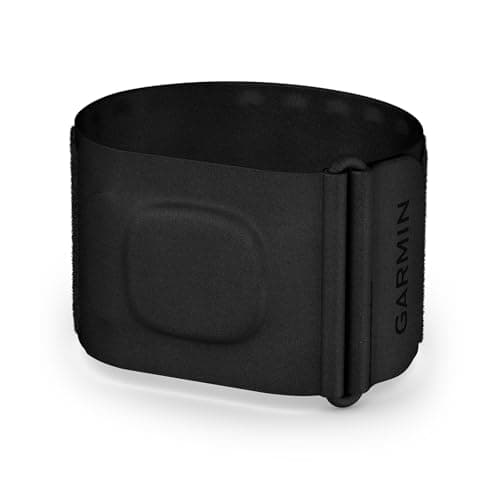 Garmin Index Sleep Monitor An upper-arm band built for sleep only: HRV status, Pulse Ox, respiration and skin temperature, with Garmin Connect free. | Best overnight HRV without a ring sizeNo subscription | 9.2/10Researched | $169.60Amazon #ad · Disclosure |
| 4 | 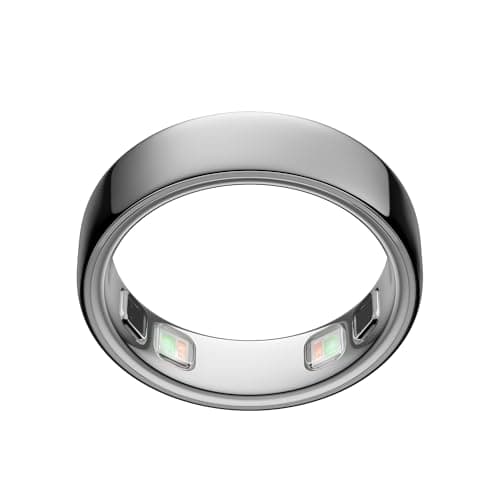 Oura Ring 5 The only brand here with published independent validation of its HRV. The number sits behind the Oura Membership, and Oura does not send HRV to Apple Health at all. | Best research record, behind a membershipMembership required | 8.9/10Researched | $299.00Amazon #ad · Disclosure |
| 5 | 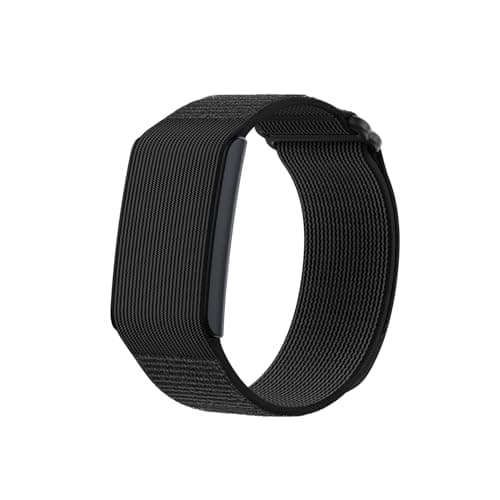 Amazfit Helio Strap A screenless wrist strap claiming up to 10 days, with HRV, sleep and recovery metrics and no required subscription. | Budget pick: cheapest 24/7 HRV with no feeNo subscription | 9.1/10Researched | $99.00Amazon #ad · Disclosure |
#ad · Prices come live from Amazon, last checked November 29, 2026. Scores are ours, built from published specs, manuals, warranty terms and named studies. Photos are illustrative stock. Tap a row for the full write-up.
How we ranked them
Three questions decided the order, in this sequence. Does the device report HRV at all without a paid plan? Does it measure across the whole night, or only when you choose to take a reading? And has anybody outside the company checked the number against a reference device?
After that the order comes from our published rubric - three-year cost of ownership (30%), evidence of accuracy (25%), claimed battery (15%), sizing and fit (10%), data ownership (10%) and phone support (10%). We have not tested any of these devices; every figure here is quoted from the maker's own page or a named study, with the date we checked it, and the methodology page sets out exactly what our scores are and are not.
Why the device shape decides the answer
HRV is unusual among wearable metrics: the same person, measured honestly by two devices on the same morning, will get two different numbers, and neither is wrong. What differs is when and how the measurement is taken.
- A ring or a sleep band measures overnight, continuously. You get a nightly average built from hours of data while you are still, which is the most stable window anyone gets. The trade is that you are relying on an optical sensor reading a finger or an upper arm, through skin, with no control over position.
- A chest strap measures the electrical signal directly, when you ask it to. It picks up the heart's own electrical activity rather than inferring beats from blood flow, which is why it is the reference in published work. The trade is obvious: almost nobody wears one to bed, so you get a morning reading rather than a night of data.
- An under-mattress mat measures without touching you. In principle the best of both - but in practice the one mat we cover with no required fee does not report HRV at all, and the one that does requires a cloud subscription. More on both below.
The practical answer for most people who take this seriously: wear the thing that measures every night, and own a strap to check it occasionally. The how-to is in how to test your ring against a chest strap.
The picks in context
1. RingConn Gen 2: best HRV tracker overall
Our highest-scoring device, and the one we would point most people to for nightly HRV. RingConn charges nothing after the purchase - no tier, no membership, no paid insights - and its own page states “No Subscriptions” and “Multi-dimensional health monitoring included.” It claims 10-12 days a charge with a case in the box rated at up to 150 days total, comes in sizes 6-14 with a free sizing kit, is IP68 to 100 m, and runs on iOS 17.0+ and Android 10.0+.
On evidence it is the only no-fee device on this page with a comparison of its own: a 2026 preprint measured it against a Polar H10 and reported a heart-rate bias of -0.42 bpm at rest. That is thin, and it is heart rate rather than HRV, but it is more than any other no-fee maker here can show.
The honest catch: a preprint is not a peer-reviewed study, and a reviewer separately found the Gen 2 reading heart rate high on runs against a chest strap - so do not use it for training heart rate, which is covered in smart ring heart rate accuracy. You also have to get the ring size right before you buy, and a ring cannot be repositioned mid-night the way a band can. Detail in the RingConn Gen 2 review.
2. Polar H10: best accuracy, and the cheapest trustworthy number
This is the device the research used as its ruler, and it is by a wide margin the cheapest thing on this page. Polar publishes a CR 2025 coin cell rated around 400 hours, Bluetooth plus ANT+ plus 5 kHz transmission with both Bluetooth and ANT+ on by default, onboard memory for one session of up to 30 hours, and a WR30 water rating. Polar Flow is recommended but not required, and the strap works with “over 150” apps - so the HRV number is yours to read in whatever app you already use.
The honest catch: there is no published H10-versus-clinical-ECG error figure, because the strap is the reference by convention rather than a device anyone bothered to validate against something better - we say that plainly rather than implying a rating it has not earned. And it is a chest strap: you will take a morning reading with it, not sleep in it, so it gives you a spot check rather than a trend. There is no subscription of any kind because there is no app tier to sell. Full write-up in the Polar H10 review, and the strap field is ranked in best chest strap for HRV.
3. Garmin Index Sleep Monitor: best overnight HRV without a ring size
If you want nightly HRV but do not want to gamble on a ring size, this is the pick. It is an upper-arm band built for one job: Garmin reports HRV status, a sleep score, sleep stages, Pulse Ox, breathing variations, respiration rate, skin temperature, Body Battery and stress, from an Elevate optical sensor, Pulse Ox, a skin temperature sensor and an accelerometer. Garmin Connect is free - the optional Connect+ plan adds AI insights and coaching, not sleep data - the claim is “up to 7 nights, with SpO2”, it is 5 ATM rated, the band is machine washable, and no Garmin watch is required.
The honest catch: no steps and no workout recording, so it is a night device and nothing else. It charges from a proprietary Garmin cable rather than USB-C. It comes in two band sizes, S-M and L-XL, measured on the upper arm rather than the wrist. And there is no published independent validation of it. It also leads our subscription-free ranking for people who will not wear a ring.
4. Oura Ring 5: best research record, behind a membership
If published evidence is what you are buying, Oura is the only brand on this page that has it: its overnight HRV is the figure Dial et al. measured across 536 nights, and no competitor has anything comparable. Sizes 6-13, iOS and Android, waterproof to 100 m, 6-9 days a charge by Oura's own figure.
Two honest catches, and together they are why this ranks fourth. The first is the fee: the Oura Membership runs $5.99 a month or $69.99 a year for as long as you use the ring, and without it the app shows only three daily scores. The second is specific to HRV and catches people out: Oura's Apple Health integration does not move HRV at all - it is on neither the export nor the import list - so if your plan was to pool a ring's HRV with everything else in Apple Health, that plan does not work. The detail is in Oura HRV and Apple Health, and the cost in what the membership costs.
5. Amazfit Helio Strap: the budget pick
The cheapest wearable here, and a genuine option if you want HRV around the clock without a fee or a ring size. A screenless 20 g wrist strap, one size fitting 145-205 mm wrists, claiming “up to 10 days of battery life with typical use” from a rated 232 mAh cell, with HRV, sleep, blood oxygen, stress, exertion and fitness level plus resting heart rate, VO2 max, training load and recovery time. Amazfit's page says “No required subscription” with none of the footnotes its Helio Ring page carries, and it stores up to 21 days of offline heart-rate data so it can run without your phone beside it.
The honest catch: no published validation of any kind, 5 ATM rather than a 100 m rating, no USB-C cable in the box (a magnetic charging head only), and no skin temperature metric despite the sensor being listed. Amazfit also states “over 50 sports modes” while the Amazon listing title says 27, and we print both rather than picking one. The Amazfit Helio Strap review has the full sheet.
Side by side
A dash means the maker does not publish that row in the sources we cite - Polar, for instance, documents Bluetooth, ANT+ and 5 kHz transmission rather than a supported-phone list, because the strap is designed to talk to whatever you point at it.
Which HRV numbers cost a fee
Four of these five devices show you your HRV for nothing after checkout. One bills for it indefinitely. On a metric you are meant to watch as a trend over months, that difference compounds faster than almost anything else on the spec sheet.
| Device | Required plan | Fees, 1 yr | Fees, 3 yrs | Fees, 5 yrs | Device price |
|---|---|---|---|---|---|
| RingConn Gen 2 | No subscription | $0 | $0 | $0 | $209.30 |
| Garmin Index Sleep Monitor | No subscription (optional extras) | $0 | $0 | $0 | $169.60 |
| Oura Ring 5 | $5.99/month or $69.99/year | $69.99 | $209.97 | $349.95 | $299.00 |
| Amazfit Helio Strap | No subscription (optional extras) | $0 | $0 | $0 | $99.00 |
Required fees only, from each brand's own published policy page with the date we checked it, and excluding the hardware. The Polar H10 is absent from that table because there is no app tier to put in it: Polar sells the strap and nothing else. Add the fees to whatever the buy rows show you today - the arithmetic over one, three and five years is in what a tracker really costs.
What did not make the list
Three devices we cover are deliberately absent, and the reasons are the useful part.
- Withings Sleep. The best no-fee under-mattress mat we cover, and it would be the ideal shape for this job - but HRV is not on its published metric list. It reports sleep cycles, heart rate, respiratory rate, snoring and breathing disturbances. We are not going to imply a metric a maker does not claim. It leads the under-mattress roundup instead.
- Emfit QS. This one genuinely is built around all-night HRV rather than a single morning reading, which is why coaches use it - but since March 2024 Emfit says the QS ships with a fixed-term cloud service, and that without an active subscription the cloud service and sleep-tracking features are not available. On a page about not paying for your own numbers, that disqualifies it.
- Ultrahuman Ring PRO. It reports HRV and charges no required fee, and it wins our battery ranking outright. It is not here because on the one criterion this page weights second-heaviest it has nothing at all: no independent validation of the Ring PRO exists, and Ultrahuman's only published data is an in-house pilot on the older Ring AIR.
Why you cannot compare two HRV numbers
This is the part most buying guides skip, and it will save you a lot of confusion. HRV is not one measurement - it is a family of them, and devices report different members of that family.
Oura reports rMSSD, averaged from five-minute samples across the night. Apple Health's only HRV type is heartRateVariabilitySDNN. Those are two different calculations on two different windows, so even if Oura did push HRV into Apple Health - it does not - the two figures would not be comparable. The same logic applies between any two brands: a ring's overnight average and a strap's ten-minute morning reading are not two attempts at one number.
What that means in practice: pick one device, measure under the same conditions every time, and watch your own trend. Never compare your number to a friend's, and do not expect two devices on one body to agree. The underlying evidence is in smart ring HRV vs a chest strap, and the ring-specific picks in best smart ring for HRV tracking.
What to check before you buy
- Whether HRV is behind a plan. On one device here it is. Ask what the app shows in month 13, not what the trial includes.
- Overnight or on demand. If you want a trend, buy something you will actually wear asleep. If you want a number you can defend, buy the strap.
- Which HRV metric it reports. If you intend to pool data in Apple Health or Google Health Connect, check that the device sends HRV at all before you rely on it.
- Sizing. A ring needs a kit and a committed size; the band and the strap adjust. That is a real difference in how easily a purchase can go wrong - the sizing guide covers it.
Mistakes to avoid
- Comparing your HRV to someone else's. It is a personal baseline, not a score. Different devices, different metrics, different windows.
- Buying a ring to get training HRV. No ring reads heart rate reliably during hard exercise, so the HRV built on it is not a workout metric. Use the strap.
- Assuming any wearable's HRV is validated. Only one brand here has published independent work behind it, and it is the one with the fee.
- Expecting two devices on one body to agree. They will not, and that is not a fault in either of them.
In detail
The picks, in full
Rank 01
Best HRV tracker overall
RingConn Gen 2
Overnight HRV with no subscription of any kind, 10-12 days a charge, and the only no-fee device here with a chest-strap comparison of its own.
Published specsResearched · every value sourced
| Subscription | None ("No Subscriptions") |
|---|---|
| Battery (claimed) | 10-12 daysMaker's claim |
| Charging case | Included; "Extended Up to 150 Days With Charging Case"Maker's claim |
| Sizes | 6-14 |
| Sizing kit | Complimentary |
| Phones | iOS 17.0+ and Android 10.0+ |
| Water resistance | IP68 (100 m / 328 ft) |
| Materials | Titanium alloy with medical-grade epoxy resin |
| HSA/FSA | Eligible through Flex |
| Warranty (US) | 1 year (non-EEA); normal battery capacity loss excluded; optional 2- or 3-year protection in the US |
| Features | "Automatic sleep apnea monitoring" with a "90.7% Sleep Apnea Monitoring Accuracy" claim (maker's claim; not a diagnosis)Maker's claim |
| US availability | Listed on Amazon.com |
How the 9.5 score breaks down
- Cost of ownership (3 years) (30%)
- 9.9
- Evidence of accuracy (25%)
- 8.7
- Battery (claimed) (15%)
- 9.7
- Sizing & fit (10%)
- 9.7
- Data ownership (10%)
- 9.5
- Platform support (10%)
- 9.7
What the specs support
- No subscription
- The charging case turns a 10-12 day ring into a months-between-outlets ring (maker's claim)
- A 2026 preprint compared it with a Polar H10 at rest: heart rate bias -0.42 bpm
- iOS and Android, free sizing kit
Trade-offs
- The chest-strap study is a preprint, seated only, and not peer-reviewed
- A reviewer found it read heart rate high during runs compared with a chest strap
- Needs iOS 17 or Android 10 or newer
- Sleep apnea figure is RingConn's own claim
Good to know
Consider another pick if you want workout heart rate you can trust on runs: a reviewer found it read high against a chest strap. Wear a strap for training.
#ad · Price as of November 29, 2026 · How we make money for the link to RingConn Gen 2
Rank 02
Best accuracy, and the cheapest trustworthy number
Polar H10
The criterion device in the published Oura-versus-strap study. It will not wear overnight comfortably, but nothing beats it for a ten-minute morning reading.
Published specsResearched · every value sourced
| Used as a study reference | Criterion device in Dial et al., Physiological Reports 2025 ("The Polar H10 was used as the criterion measurement") |
|---|---|
| Battery | CR 2025 coin cell; about 400 hoursMaker's claim |
| Connectivity | Bluetooth, ANT+ and 5 kHz |
| Memory | Stores one training session of up to 30 hours |
| Water resistance | WR30 |
| US availability | Listed on Amazon.com |
How the 9.6 score breaks down
- Reference-grade evidence (30%)
- 9.9
- HRV & app support (25%)
- 9.5
- Connectivity (15%)
- 9.7
- Battery & charging (15%)
- 9.5
- Fit & comfort (15%)
- 9.2
What the specs support
- The reference device in the one peer-reviewed ring-vs-chest-strap study we found
- Bluetooth and ANT+, so it pairs with phones, watches and gym gear
- Coin-cell battery rated around 400 hours: no charging
- Can store one session on its own, so you don't need a phone nearby
Trade-offs
- Coin cell needs replacing eventually
- A chest strap is less comfortable to sleep in than a ring, so it's a checking tool, not a replacement
Good to know
Consider another pick if you'd rather never swap a coin cell: Garmin's HRM 600 is rechargeable.
#ad · Price as of November 29, 2026 · How we make money for the link to Polar H10
Rank 03
Best overnight HRV without a ring size
Garmin Index Sleep Monitor
An upper-arm band built for sleep only: HRV status, Pulse Ox, respiration and skin temperature, with Garmin Connect free.
Published specsResearched · every value sourced
How the 9.2 score breaks down
- Cost of ownership (3 years) (30%)
- 9.7
- Evidence of accuracy (25%)
- 8.5
- Battery (claimed) (15%)
- 9.0
- Sizing & fit (10%)
- 9.5
- Data ownership (10%)
- 9.2
- Platform support (10%)
- 9.7
What the specs support
- No subscription: every metric the band records shows in the free Garmin Connect app
- Nothing on your finger or wrist; the band sits on the upper arm and comes off in the morning
- Claimed 7 nights per charge; DC Rainmaker saw 8-9
- Two band sizes and no ring-size guesswork
- Works with iPhone and Android and doesn't need a Garmin watch
Trade-offs
- Built for sleep: no steps and no workout recording, so it's a sleep tracker, not an all-day wearable
- No published validation of this band against a chest strap or a sleep lab; the one study of a Garmin device at night used an older Fenix 6 watch
- DC Rainmaker found a bug where tapping to snooze the alarm ended the night's sleep data
- An upper-arm band is more visible in bed than a ring
Good to know
Consider another pick if you want one device that counts steps and records workouts as well as your sleep: the Index Sleep Monitor does neither.
#ad · Price as of November 29, 2026 · How we make money for the link to Garmin Index Sleep Monitor
Rank 04
Best research record, behind a membership
Oura Ring 5
The only brand here with published independent validation of its HRV. The number sits behind the Oura Membership, and Oura does not send HRV to Apple Health at all.
Published specsResearched · every value sourced
How the 8.9 score breaks down
- Cost of ownership (3 years) (30%)
- 8.2
- Evidence of accuracy (25%)
- 9.5
- Battery (claimed) (15%)
- 9.0
- Sizing & fit (10%)
- 9.2
- Data ownership (10%)
- 8.5
- Platform support (10%)
- 9.7
What the specs support
- Oura's Gen 3 and Gen 4 rings have the strongest independent validation of any ring we found, including the only peer-reviewed study against a Polar H10 chest strap
- Works on iPhone and Android
- Waterproof to 100 m
- Brand-made sizing kit available on Amazon
Trade-offs
- Without the membership you see only three daily scores
- The membership fee runs for as long as you use the ring (three-year math on every Oura page)
- Batteries are excluded from the 1-year warranty
- Ring 5 itself has not yet been through the published studies its predecessors have
- Narrower size range (6-13) than Ring 4 (4-15)
Good to know
Consider another pick if you won't pay a monthly or yearly fee for your own sleep data: without the membership, Oura shows only its three daily scores.
#ad · Price as of November 29, 2026 · How we make money for the link to Oura Ring 5
Rank 05
Budget pick: cheapest 24/7 HRV with no fee
Amazfit Helio Strap
A screenless wrist strap claiming up to 10 days, with HRV, sleep and recovery metrics and no required subscription.
Published specsResearched · every value sourced
How the 9.1 score breaks down
- Cost of ownership (3 years) (30%)
- 9.7
- Evidence of accuracy (25%)
- 8.0
- Battery (claimed) (15%)
- 9.5
- Sizing & fit (10%)
- 9.5
- Data ownership (10%)
- 9.0
- Platform support (10%)
- 9.7
What the specs support
- No required subscription, and the strap page makes no Zepp Aura claim at all
- Claimed ten days a charge, which is longer than any wrist device on this site
- No screen and no ring size: it adjusts to any wrist from 145 to 205 mm
- 21 days of offline heart-rate storage, so a night away from your phone isn't a lost night
- Works with iPhone and Android, and is rated 5 ATM
Trade-offs
- No published study of this device against an ECG, a chest strap or a sleep lab - we looked
- The box has a magnetic charging head but no USB-C cable, so you supply the cable
- No GPS, so outdoor runs and rides borrow your phone's location
- A Zepp account is required, which puts your health data on Amazfit's platform
- No skin-temperature metric, which rings at this price do offer
Good to know
Consider another pick if you want published validation, or you want the device itself to record a route: the Helio Strap has no GPS and no study behind it.
#ad · Price as of November 29, 2026 · How we make money for the link to Amazfit Helio Strap
Which of the five is yours
You want a nightly HRV trend and no bill, ever: RingConn Gen 2.
You want the number the studies trust, for the least money: Polar H10 - and accept that it is a morning reading, not a trend.
You want overnight HRV but will not commit to a ring size: Garmin Index Sleep Monitor.
Published evidence matters more to you than the fee: Oura Ring 5, with the membership total counted in and the Apple Health gap understood.
You want 24/7 HRV as cheaply as possible: Amazfit Helio Strap.
You are serious about it: one wearable for the trend, one strap to check it. That is what the two cheapest picks on this page add up to.
The bottom line
Our recommendation
Our pick · Best HRV Tracker
Overnight HRV with no subscription of any kind, 10-12 days a charge, and the only no-fee device here with a chest-strap comparison of its own.
#ad · Price as of November 29, 2026 · How we make money for the link to RingConn Gen 2
Runner-up
The criterion device in the published Oura-versus-strap study. It will not wear overnight comfortably, but nothing beats it for a ten-minute morning reading.
#ad · Price as of November 29, 2026 · How we make money for the link to Polar H10
How we scored this
How these picks were chosen
Every pick here is labeled Researched: chosen from each brand's fee policy, spec sheet, sizing and warranty pages, and the published studies that measured the ring (or its predecessor) against a chest strap, an ECG or a sleep lab, then scored on a public rubric. Every figure links to where it came from, and maker performance numbers are labeled “maker's claim,” so you can see exactly what you're paying for before you buy.
Scores are editorial judgments built from that documented research. Commissions never set a score or decide a pick. The rubric and its weights are published.
Questions
Frequently asked
What is the best HRV tracker?
What is the best HRV tracker without a subscription?
Is a chest strap more accurate than a ring for HRV?
Why do two devices give me different HRV numbers?
Can an under-mattress tracker measure HRV?
Receipts
Sources
- Dial et al., Physiological Reports 2025: nocturnal resting HR and HRV in consumer wearables vs Polar H10 (checked 2026-09-19)
- RingConn: Gen 2 product page (checked 2026-09-19)
- Tao et al., Research Square preprint 2026: ring PPG (RingConn Gen 2) vs chest strap in shooting athletes (not peer-reviewed) (checked 2026-09-19)
- Polar: H10 user manual, technical specifications (checked 2026-09-19)
- Polar US: H10 heart rate sensor store page ("Water resistance: WR30"; "Memory One session, up to 30 hours"; Pro Strap XS-S 60-68 cm, M-XXL 68-87 cm and XXXL 82-114 cm, Soft Strap M-XXL 65-96 cm; "Up to 400h"; "the most accurate sensor in Polar's history"; "When others want to validate the accuracy of their devices, they use Polar H10"; compatibility with "over 150" fitness apps) (checked 2026-10-16)
- Garmin press release: Index Sleep Monitor smart sleep band (June 18, 2025) (checked 2026-09-21)
- Garmin press release: Garmin Connect+ plan and pricing (March 27, 2025) (checked 2026-09-21)
- Oura: Oura Ring 5 store page (battery, water rating, sizes, HSA/FSA) (checked 2026-09-19)
- Oura Support: Oura Membership (price, what works without it) (checked 2026-09-19)
- Oura Support: Heart Rate Variability ("Oura takes five-minute samples, not just a single reading, throughout the night"; the Readiness figure is "the mean of all five-minute samples taken while you sleep"; typical values run "from under 20 to over 200 milliseconds" and you should "compare your current HRV only against your own historical trends, not against others") (checked 2026-10-09)
- Apple Developer: HealthKit heartRateVariabilitySDNN (the only HRV quantity type Apple Health stored through watchOS 26 — the standard deviation of normal-to-normal beat intervals, in milliseconds; available since iOS 11.0 / watchOS 4.0) (checked 2026-10-09)
- Amazfit US: Helio Strap product page ("No required subscription" and "with no required monthly subscription"; battery "Up to 10 days of battery life with typical use" and in the FAQ "Up to 10 days under typical usage conditions" from a "232 mAh (rated value)" cell; "up to 21 days of offline heart-rate storage"; "5 ATM water resistance" and "It is not intended for diving or high-pressure water activities"; dimensions without sensor "33.97 x 24.3 x 10.59mm", weight "20g", strap width "22mm", wrist size "145-205mm", "Hook & loop fastening"; "Magnetic charging head (no cable)" and a USB-C cable listed as not included; packing list of "Smart band & strap (assembled)", magnetic charging head and manual; supported devices "Android 7.0 and above, iOS 15.0 and above" through the "Zepp App"; it "works with both iPhone and Android devices through the Zepp App"; metrics named as "heart rate variability, sleep, blood oxygen, stress, exertion, and fitness level" plus resting heart rate, VO2 max, training load, training effect and recovery time; "over 50 sports modes available through the Zepp App"; no Zepp Aura footnote anywhere on the page) (checked 2026-10-30)
- Emfit Oy: EMFIT QS ordering and pricing page (Finnish; euro pricing, 3-year cloud service then a yearly fee) (checked 2026-09-26)
- Withings US: Sleep under-mattress tracking mat (sensors, metrics, dimensions, power, app, subscription FAQ) (checked 2026-09-26)
Every figure on this page is traceable. Fees come from each brand's own policy pages (with the date we checked), specs from maker pages and listings, and accuracy claims from named, published studies. Hardware prices are set by Amazon and change daily, so we link them live instead of printing them. Read the full method.
Brands: want your product tested? For Brands.