Quick picks
The picks at a glance
| # | Product | Best for | Score | Price |
|---|---|---|---|---|
| 1 | 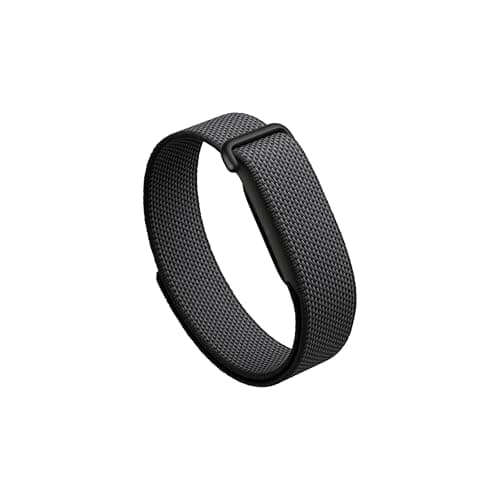 Google Fitbit Air Sleep stages, Sleep Score, 24/7 heart rate, HRV, SpO2 and Afib alerts in the free Google Health app. A Google Account is mandatory. | Best overall, no feeNo subscription | 7.2/10Researched | $99.99Amazon #ad · Disclosure |
| 2 | 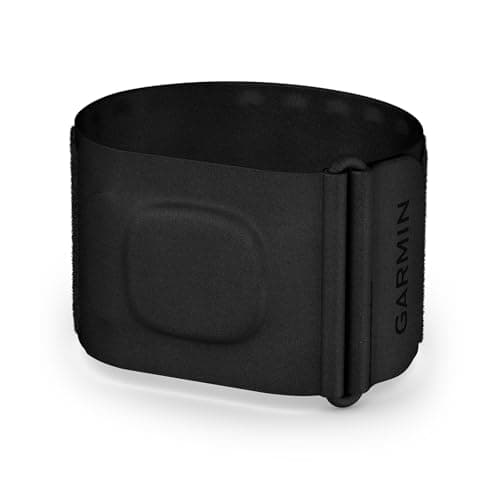 Garmin Index Sleep Monitor An upper-arm band worn at night and taken off at breakfast, with the richest free sleep data here - and no steps or workouts at all. | Best for sleep onlyNo subscription | 7.0/10Researched | $169.70Amazon #ad · Disclosure |
| 3 | 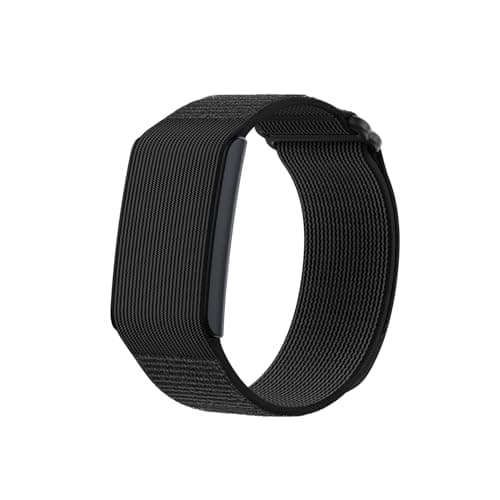 Amazfit Helio Strap The Whoop-shaped option without the membership: no screen, a claimed ten days a charge, and no published testing behind any of it. | Best for all-day recoveryNo subscription | 6.7/10Researched | $99.00Amazon #ad · Disclosure |
#ad · Prices come live from Amazon, last checked November 4, 2026. Scores are ours, built from published specs, manuals, warranty terms and named studies. Photos are illustrative stock. Tap a row for the full write-up.
Who this page is for
Most of this site argues about rings, because a ring is the quietest way to measure a night. But a ring asks two things not everybody will give: a size guess before you buy, and something on a finger you may use for work, lifting or a wedding band. If you have landed here after deciding a ring is not for you - and you still refuse to pay a monthly fee to read your own heart rate - this is the shortlist.
The rule is the same one that runs the rest of the site. A tracker earns a place here when the brand's own pages put the device's measurements in a free app, and loses it when the interesting part of what the sensor records sits behind a plan. For comparison, Oura's membership is $69.99 a year, which is $209.97 across three years of ownership on top of the hardware - the number every device below is measured against.
What counts as no subscription
“No subscription” is marketed loosely, so we read the brand's own words and quote them. Three different shapes show up in this category, and only the first one passes:
- No required plan. The device's metrics are in the free app; a paid tier may exist for coaching or AI features. Garmin: “All existing features and data in Garmin Connect will remain free.” Google, for the Fitbit Air: the tracker's heart rate, sleep stages, Sleep Score, SpO2 and cardio load are in the free app, and only the Gemini-built coach and deeper insights need Premium. Amazfit, for the Helio Strap: “No required subscription.”
- A bundled plan, which is not the same thing. Amazfit's Helio Ring page is the clean example: footnote 3 reads “Readiness insights require subscription to Zepp Aura,” and the same page lists Zepp Aura as free for Helio Ring owners. Free today because the brand is paying for it, not because no plan exists. We cover that ring in the Amazfit Helio Ring review, and the Helio Strap page carries no footnote like it.
- The subscription is the product. WHOOP is the obvious case: the hardware comes with the membership and the data stops when the membership does. Our page on WHOOP without a membership quotes WHOOP's own staff on what happens after it lapses.
Why the shortlist is this short
Three picks is not laziness; it is the result. We went looking for non-ring wearables sold in the US whose maker publishes specs, a size range, a warranty and a plan policy we can quote, and that put the sensor's own measurements in a free app. Almost everything fell out at one of those gates: WHOOP sells the membership, Oura gates most of its data, and the cheap unbranded bands that flood a marketplace search publish no sizing, no warranty and no privacy terms worth reading - the same reason no sub-$100 ring made our under-$100 roundup.
What is left is a wrist band from Google, a night-only arm band from Garmin and a screenless strap from Amazfit. They do three genuinely different jobs, which is why the ranking below is as much about matching the job as it is about merit.
How we ranked them
Same published rubric as every other page here, weighted toward the thing that decides what you actually pay over the years you own a device. In order of weight: three-year cost of ownership, published evidence of accuracy, days per charge, fit, data ownership and platform support. The full version, with what each sub-score looks at, is on our methodology page.
Two consequences worth stating before you read the cards. First, none of these three has published validation, so the evidence column - a quarter of the score - is low for all of them, and a ring would beat them there. Second, because the three do different jobs, the order below is a recommendation for the job each one is best at, not a claim that number three is a bad device.
The picks in context
1. Google Fitbit Air is the one to buy if you want a single tracker for day and night. Google puts heart rate, heart-rhythm monitoring with Afib alerts, SpO2, resting heart rate, HRV, sleep stages and Sleep Score in the free Google Health app, with “Battery life of up to 7 days” and five minutes on the cable buying a day. It is screenless, which keeps it cheap and light (5.2 g bare, 12 g with the band), and it is rated “water resistant up to 50 meters.” The costs: a Google Account is mandatory, the Gemini Health Coach that Google markets hardest is the paid part, and it is still a wrist device in bed.
2. Garmin Index Sleep Monitor is the most interesting device on this page and the most limited. It is a fabric band for the upper arm that you wear at night: sleep score and stages, HRV status, Pulse Ox, breathing variations, respiration rate, skin temperature, Body Battery and stress, all in free Garmin Connect, claimed at “up to 7 nights, with SpO2” per charge. It records no steps and no workouts, which sounds like a flaw until you notice that it means nothing to wear all day. DC Rainmaker, who got 8-9 nights from a charge, also found a bug where tapping to snooze the alarm ended the night's sleep data - worth knowing before you rely on it.
3. Amazfit Helio Strap is the Whoop-shaped option with the membership removed: a screenless 20-gram module on a 22 mm strap, no size to guess (it fits 145-205 mm wrists), a claimed “up to 10 days of battery life with typical use” from a 232 mAh cell, and “up to 21 days of offline heart-rate storage” so a phone-free night is not a lost night. Amazfit names HRV, sleep, blood oxygen, stress, exertion and fitness level, with VO2 max, training load, training effect and recovery time on top, and over 50 sports modes through the Zepp App. The honest marks against it: no published testing, no GPS, no skin-temperature metric, a Zepp account requirement, and a box that contains a magnetic charging head but no USB-C cable. The long version is in our Amazfit Helio Strap review.
Side by side
The row that decides most purchases is the third one. None of these needs a size kit or a tape measure around a finger, which is the single biggest practical advantage this page has over every ring roundup on the site - and the reason people who return a ring often end up here. If you want the ring version of that argument anyway, it is in the smart ring sizing guide.
None of them has been tested
This is the price of leaving the ring category, and we would rather lead with it than bury it. We could not find a peer-reviewed study, a preprint or an independent laboratory comparison for the Fitbit Air, the Garmin Index Sleep Monitor or the Amazfit Helio Strap. They are all new, and nobody has published a test.
There is a cheap way to stop guessing, and it is the same one we give ring owners: wear the tracker next to a chest strap for a few nights and compare. Our chest-strap test protocol works for any of these three, and the strap to do it with is in best chest strap for HRV.
Who ends up holding your data
Refusing a subscription is one kind of ownership. Where the data lands is the other, and all three picks ask for an account on a platform. Google requires a Google Account for the Fitbit Air, so the health data lives in a Google product; Amazfit requires a Zepp account; Garmin requires a Garmin account. None of the three is unusual, and none of them is nothing.
If that is the part you care about most, read smart ring data privacy and what data these devices collect: the policies differ more than the marketing does, and a free app is not the same thing as a private one.
Three things that aren't picks
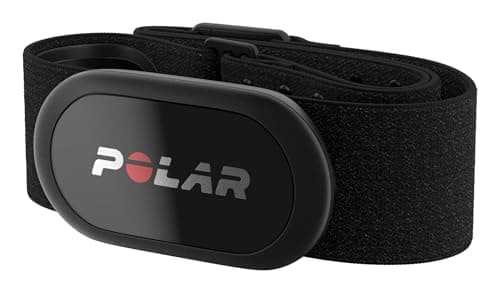
The Polar H10 chest strap scores higher than anything on this page and is not a pick, because it is a measuring instrument rather than a tracker: no app score, no sleep staging, no all-day wear. It is what you buy to check another device, and our Polar H10 review explains why researchers use it as the reference.
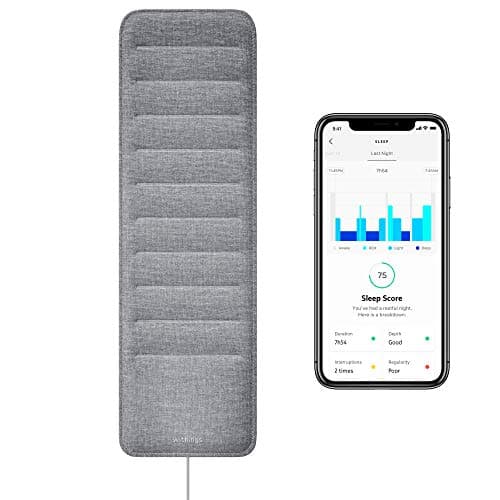
An under-mattress mat is the right answer if you would rather wear nothing at all. Withings Sleep is the only mat we found with no required fee - Eight Sleep bundles an annual plan into the Pod, and Emfit now ships the QS with a fixed-term cloud service - and the comparison is in best under-mattress sleep trackers.
A ring, if you will reconsider one. The no-fee rings run 10-12 days a charge, come with sizing kits, and one of them has a published chest-strap comparison, which is more than anything here can say. The field is ranked in best smart rings without a subscription, and the cheapest branded option is covered in Amazfit Helio Ring vs Oura Ring 5.
In detail
The picks, in full
Rank 01
Best overall, no fee
Google Fitbit Air
Sleep stages, Sleep Score, 24/7 heart rate, HRV, SpO2 and Afib alerts in the free Google Health app. A Google Account is mandatory.
Published specsResearched · every value sourced
How the 7.2 score breaks down
- Cost of ownership (3 years) (30%)
- 9
- Evidence of accuracy (25%)
- 5
- Battery (claimed) (15%)
- 6
- Sizing & fit (10%)
- 8
- Data ownership (10%)
- 6
- Platform support (10%)
- 9
What the specs support
- No required plan: sleep stages, Sleep Score, heart rate, HRV and SpO2 all show in the free Google Health app
- Nothing on your finger, and no ring size to guess before you buy
- Claimed 7 days per charge, and five minutes on the cable buys a full day
- Afib alerts and SpO2 at a price well below every ring on this site
- Works with iPhone and Android, and the band is rated to 50 meters
Where it falls short
- No published study has tested this tracker; the only Fitbit in our evidence library is the older Sense 2, which staged sleep less accurately than an Oura ring
- A Google Account is mandatory, so your health data sits in a Google product
- Screenless: every reading has to be read in the app, and there is no display to glance at
- Wrist-worn, so it has the same in-bed bulk problem that sends many buyers to a ring
- The Gemini Health Coach, the feature Google markets hardest, is the part you have to pay for
Skip this if…
…You want a device with published validation behind it, or you refuse to put your health data behind a mandatory Google Account.
#ad · Price as of November 4, 2026 · How we make money for the link to Google Fitbit Air
Rank 02
Best for sleep only
Garmin Index Sleep Monitor
An upper-arm band worn at night and taken off at breakfast, with the richest free sleep data here - and no steps or workouts at all.
Published specsResearched · every value sourced
How the 7.0 score breaks down
- Cost of ownership (3 years) (30%)
- 9
- Evidence of accuracy (25%)
- 4
- Battery (claimed) (15%)
- 6
- Sizing & fit (10%)
- 8
- Data ownership (10%)
- 7
- Platform support (10%)
- 9
What the specs support
- No subscription: every metric the band records shows in the free Garmin Connect app
- Nothing on your finger or wrist; the band sits on the upper arm and comes off in the morning
- Claimed 7 nights per charge; DC Rainmaker saw 8-9
- Two band sizes and no ring-size guesswork
- Works with iPhone and Android and doesn't need a Garmin watch
Where it falls short
- Built for sleep: no steps and no workout recording, so it's a sleep tracker, not an all-day wearable
- No published validation of this band against a chest strap or a sleep lab; the one study of a Garmin device at night used an older Fenix 6 watch
- DC Rainmaker found a bug where tapping to snooze the alarm ended the night's sleep data
- An upper-arm band is more visible in bed than a ring
Skip this if…
…You want one device that counts steps and records workouts as well as your sleep: the Index Sleep Monitor does neither.
#ad · Price as of November 4, 2026 · How we make money for the link to Garmin Index Sleep Monitor
Rank 03
Best for all-day recovery
Amazfit Helio Strap
The Whoop-shaped option without the membership: no screen, a claimed ten days a charge, and no published testing behind any of it.
Published specsResearched · every value sourced
How the 6.7 score breaks down
- Cost of ownership (3 years) (30%)
- 9
- Evidence of accuracy (25%)
- 2
- Battery (claimed) (15%)
- 8
- Sizing & fit (10%)
- 8
- Data ownership (10%)
- 6
- Platform support (10%)
- 9
What the specs support
- No required subscription, and the strap page makes no Zepp Aura claim at all
- Claimed ten days a charge, which is longer than any wrist device on this site
- No screen and no ring size: it adjusts to any wrist from 145 to 205 mm
- 21 days of offline heart-rate storage, so a night away from your phone isn't a lost night
- Works with iPhone and Android, and is rated 5 ATM
Where it falls short
- No published study of this device against an ECG, a chest strap or a sleep lab - we looked
- The box has a magnetic charging head but no USB-C cable, so you supply the cable
- No GPS, so outdoor runs and rides borrow your phone's location
- A Zepp account is required, which puts your health data on Amazfit's platform
- No skin-temperature metric, which rings at this price do offer
Skip this if…
…You want published validation, or you want the device itself to record a route: the Helio Strap has no GPS and no study behind it.
#ad · Price as of November 4, 2026 · How we make money for the link to Amazfit Helio Strap
What to check before you buy
- Read the plan page, not the box. Every brand here has a paid tier of some kind. What matters is whether the sensor's own numbers - heart rate, HRV, sleep stages, SpO2 - are behind it. Quote the brand to yourself before you pay.
- Decide whether you want daytime data. The Garmin band deliberately does not count steps or record workouts. If you want one device for everything, that rules it out; if you want nothing on your body by day, it is the reason to buy it.
- Check what is in the box. The Helio Strap ships with a magnetic charging head and no USB-C cable; the Garmin uses a proprietary cable. Neither comes with a charging case, so a lost cable is a dead tracker.
- Check the account you are agreeing to. A mandatory Google or Zepp account is part of the price.
- Check the return window at the retailer you buy from. Returns are handled by the seller, not the brand - the channel differences are in where to buy and warranty and returns.
Mistakes to avoid
- Treating “free with the device” as “free.” A bundled plan is a commercial decision the brand can reverse. A brand with no paid tier at all cannot reverse anything.
- Buying a screenless tracker and expecting a watch. No display means every reading is a phone interaction. Some people find that restful; some find it maddening.
- Reading sleep stages as measurements. Stage breakdowns are the least reliable output of any consumer tracker. Total sleep time and your own trend line are what to act on - see sleep tracking accuracy.
- Buying an unbranded band to save money. No sizing, no warranty, no plan policy and no privacy terms is not a bargain; it is an unknown.
How we scored this
How these picks were chosen
Every pick here is labeled Researched: chosen from each brand's fee policy, spec sheet, sizing and warranty pages, and the published studies that measured the ring (or its predecessor) against a chest strap, an ECG or a sleep lab, then scored on a public rubric. Every figure links to where it came from, and maker performance numbers are labeled “maker's claim,” so you can see exactly what you're paying for before you buy.
Scores are editorial judgments built from that documented research. Commissions never set a score or decide a pick. The rubric and its weights are published.
What changed
- Published.
Questions
Frequently asked
Is there a fitness tracker with no subscription at all?
What is the best Whoop alternative without a membership?
Do any of these need a specific phone?
Which one has the longest battery life?
Are these as accurate as a ring?
Can I track sleep without wearing anything?
Receipts
Sources
- Amazfit US: Helio Strap product page ("No required subscription" and "with no required monthly subscription"; battery "Up to 10 days of battery life with typical use" and in the FAQ "Up to 10 days under typical usage conditions" from a "232 mAh (rated value)" cell; "up to 21 days of offline heart-rate storage"; "5 ATM water resistance" and "It is not intended for diving or high-pressure water activities"; dimensions without sensor "33.97 x 24.3 x 10.59mm", weight "20g", strap width "22mm", wrist size "145-205mm", "Hook & loop fastening"; "Magnetic charging head (no cable)" and a USB-C cable listed as not included; packing list of "Smart band & strap (assembled)", magnetic charging head and manual; supported devices "Android 7.0 and above, iOS 15.0 and above" through the "Zepp App"; it "works with both iPhone and Android devices through the Zepp App"; metrics named as "heart rate variability, sleep, blood oxygen, stress, exertion, and fitness level" plus resting heart rate, VO2 max, training load, training effect and recovery time; "over 50 sports modes available through the Zepp App"; no Zepp Aura footnote anywhere on the page) (checked 2026-10-30)
- Amazon search results for "Amazfit Helio Strap" (listing title "Amazfit Helio Strap Screenless Activity Tracker, 10-Day Battery, iOS/Android | Subscription Free, 24/7 Activity & Sleep Tracker with Heart Rate, 27 Sports Modes, Strength Training, Hyrox Race", showing In Stock when checked) (checked 2026-10-30)
- Gadgets & Wearables technical specs: Amazfit Helio Strap (sensors listed as accelerometer, gyroscope, optical heart rate, SpO2, temperature and a vibration motor; "Rechargeable battery; 232 mAh" with "Up to 10 days" and a "Magnetic charging head"; "5 ATM"; "20 g"; "33.97 x 24.3 x 10.59 mm"; "Bluetooth Yes (5.2 BLE)" with no Wi-Fi, NFC, cellular or GPS; HRV, stress, blood oxygen, respiration rate and sleep listed as supported while skin temperature is listed as not; smartphone compatibility "Android 7.0+ and iOS 15.0+"; release date "2025-06") (checked 2026-10-30)
- Google Store: Google Fitbit Air tech specs (battery, sensors, water rating, sizes, compatibility) (checked 2026-09-24)
- Google blog: introducing the new Google Fitbit Air (May 2026) (checked 2026-09-24)
- Google Store: Google Health Premium (price and what the plan adds) (checked 2026-09-24)
- Google Health Help: what the Sleep Score is, and what needs Premium (checked 2026-09-24)
- Amazon search results for "Fitbit Air" (listing titles) (checked 2026-09-24)
- Garmin press release: Index Sleep Monitor smart sleep band (June 18, 2025) (checked 2026-09-21)
- Garmin: Index Sleep Monitor owner's manual, specifications (checked 2026-09-21)
- Garmin press release: Garmin Connect+ plan and pricing (March 27, 2025) (checked 2026-09-21)
- DC Rainmaker: Garmin Index Sleep Monitor in-depth review (June 2025) (checked 2026-09-21)
- Amazon search results for "Garmin Index Sleep Monitor" (listing titles) (checked 2026-09-21)
- Oura Support: Oura Membership (price, what works without it) (checked 2026-09-19)
- WHOOP Community: what happens when I cancel (staff reply, Oct 8, 2025) (checked 2026-09-19)
- Robbins et al., Sensors 2024: three wearables for sleep tracking vs PSG (funded by Oura; PMC11511193) (checked 2026-09-19)
- Dial et al., Physiological Reports 2025: nocturnal resting HR and HRV in consumer wearables vs Polar H10 (checked 2026-09-19)
- Herberger et al., Scientific Reports 2025: finger ring trackers in the clinical sleep lab (PMC11923143) (checked 2026-09-19)
Every figure on this page is traceable. Fees come from each brand's own policy pages (with the date we checked), specs from maker pages and listings, and accuracy claims from named, published studies. Hardware prices are set by Amazon and change daily, so we link them live instead of printing them. Read the full method.