Why a ring site reviews a chest strap
This site exists for one kind of buyer: somebody who wants recovery data without a watch and without a monthly fee. The awkward part of that position is that no ring brand publishes an accuracy figure you can audit, and the independent research that does exist is thin - which we lay out in full on how accurate smart rings are. A chest strap is the cheapest way to stop arguing about it. One week of wearing both, and your ring's resting heart rate and HRV either track the reference or they do not.
That makes the H10 a tool rather than a rival. It is not a sleep tracker, it has no readiness score, and nobody wants to sleep in one indefinitely. It answers a single question - is my ring's number real - and then it goes in a drawer until you buy your next ring. The protocol is on test your ring against a chest strap.
The claim that matters
Polar makes a bold marketing claim on its own store page - the H10 is “the most accurate sensor in Polar's history”, and “when others want to validate the accuracy of their devices, they use Polar H10” ( Polar). Marketing claims are not evidence and we would normally leave that where it fell. In this case the published literature happens to agree with it: the strap was the criterion device in Dial et al. 2025 (Physiological Reports, with the per-device results in the open-access full text), and an H10 was also the comparison device in the 2026 RingConn Gen 2 preprint we cite elsewhere (Research Square, not peer-reviewed).
One thing to be precise about: being the reference device in a study is not a measured accuracy rating. We could not find a published H10-versus-clinical-ECG error figure, and electrical chest straps are treated as close enough to ECG by convention rather than by a number on a box. What you are buying is that convention - which is exactly what makes a home comparison worth running.
Specifications, sourced
| Published spec | Polar H10 | Garmin HRM 600 | Wahoo TRACKR Heart Rate |
|---|---|---|---|
| Used as a study reference | Criterion device in Dial et al., Physiological Reports 2025 ("The Polar H10 was used as the criterion measurement") | — | — |
| Sensing | — | Real-time heart rate and heart rate variability | — |
| Battery | CR 2025 coin cell; about 400 hours (maker's claim) | Rechargeable lithium-ion; up to 2 months at 1 hour a day (maker's claim) | Rechargeable lithium-ion over USB-C; "over 100 hours" in normal conditions (maker's claim) |
| Connectivity | Bluetooth, ANT+ and 5 kHz | — | Bluetooth and ANT+ |
| Memory | Stores one training session of up to 30 hours | Records activity on its own and syncs afterward | — |
| Water resistance | WR30 | 5 ATM | IPX7 |
| Strap sizes | — | XS-S and M-XL | — |
| HRV | — | — | HRV "with a compatible app"; Wahoo's own app and bike computers don't display or record HRV (per a Wahoo support answer) |
| US availability | Listed on Amazon.com | Listed on Amazon.com | Listed on Amazon.com |
| Score | 8.6/10 | 7.6/10 | 6.6/10 |
Polar's technical-specifications page lists the battery as a “CR 2025” coin cell with an operating time of “400 h”, an operating range of “-10 °C to +50 °C / 14 °F to 122 °F”, and transmission over the “Bluetooth® Heart Rate Service”, the “ANT+™ Heart Rate Monitor Profile” and “GymLink, 5 kHz (send heart rate only)” ( Polar manual). The store page adds the two figures the manual leaves out: “Water resistance: WR30” and “Memory One session, up to 30 hours”.
The coin cell
A CR 2025 coin cell rated at about 400 hours is the most underrated feature of this strap for the job we care about. An overnight comparison is seven continuous nights of recording, a far heavier duty cycle than the hour-a-day pattern rechargeable straps are rated against. The H10 cannot arrive flat, cannot be left off the charger, and cannot die on night five and cost you the week.
The trade is consumables. Once every year or two of regular use you are prying open the back of the connector and dropping in a new cell, and if you hate that, Garmin's rechargeable HRM 600 is rated at up to two months at an hour a day (Garmin) and Wahoo's TRACKR claims over 100 hours over USB-C (Wahoo). Neither of those is the device in the research. The full head-to-head is on Polar H10 vs Garmin HRM 600.
HRV: what it hands your app
HRV is the number most ring owners actually want to audit, and it is also where the comparison most often goes wrong - not because of the hardware, but because HRV is not one quantity. Oura reports rMSSD, taking “five-minute samples, not just a single reading, throughout the night” and reporting the mean of those samples (Oura Support), while the only HRV type Apple Health stores is SDNN (Apple Developer). Two different statistics over two different sampling windows will never agree, whatever the sensors do.
The H10 helps here because it hands over beat-to-beat intervals rather than a smoothed average, which is what an HRV app needs to compute whichever statistic you have chosen. Polar recommends its own free app and says plainly that “it is recommended to use the Polar Flow app but it is also possible to use other applications” (Polar manual), and the store page claims compatibility with “over 150” fitness apps. Nothing about the strap requires a subscription, which is why it earns a place on a site about rings with no monthly fee. What the published comparisons found about ring HRV is on smart ring HRV vs a chest strap.
What it pairs with
The manual notes that “the H10 transmits your heart rate signal simultaneously via Bluetooth and ANT+” and that “both connections are set on by default” (Polar manual), with a third 5 kHz GymLink channel for gym equipment and older Polar watches. That is the broadest connectivity in this category: a phone running an HRV app, a watch and a treadmill can all read the same heartbeat without a dongle.
Polar does not publish a maximum number of simultaneous Bluetooth connections on the pages we cite, so we will not put a figure on it. If your plan involves two phones reading the strap at once, test that in the first week, while the strap is still returnable.
Fit, strap sizes and wet electrodes
Polar lists the Pro Strap in XS-S (60-68 cm), M-XXL (68-87 cm) and XXXL (82-114 cm), with a Soft Strap in M-XXL (65-96 cm), and rates the sensor WR30 (Polar). The strap composition is published too - “38% Polyamide, 29% Polyurethane, 20% Elastane, 13% Polyester” with silicone prints (Polar manual) - which matters if elastane has bothered your skin before. Ring buyers have a related problem with what sits against the finger, and we cover it on smart rings and sensitive skin.
One habit decides whether your data is any good: wet the electrodes before you put the strap on, every time. A dry electrode produces noise for the first minutes of a recording, and in an overnight ring comparison those are exactly the minutes where you are trying to read a settling heart rate. Wear it snug, just below the chest muscles.
When it will not connect
“Polar H10 not connecting” is one of the most searched phrases about this strap, and from Polar's own documentation the causes are mundane: a dry or dirty electrode, a flat coin cell, or the strap already being held by another device. Because Bluetooth and ANT+ are both on by default, a watch or a gym machine that grabbed the strap first can be the reason your phone cannot see it.
Work through it in that order - moisten the electrodes, close every other app and device that might be paired, then swap the cell - before concluding the hardware is faulty. None of that is a complaint specific to the H10; it is the nature of a device with three radios and a replaceable battery.
Three honest reasons to skip it
- You will not actually sleep in it. A chest strap is a measuring tool, not a nightly wearable. If you know yourself well enough to know the strap will stay in the box, skip it and read the published evidence we have already summarized rather than paying for a test you will not run.
- You want one device for training and recovery. The H10 does training heart rate superbly and recovery scoring not at all - no readiness number, no sleep stages, no trend graph unless an app you choose builds one.
- You refuse to buy coin cells. Legitimate. Buy the rechargeable Garmin HRM 600 instead and accept that your home test is your own rather than a replication of the published one.
What we would buy
Our picks for this job
The three straps a ring owner would consider
All three are real, currently listed chest straps. Prices move daily and we only ever show the live figure, so check each one before you buy. The H10 is the pick for auditing a ring; the other two are better objects for daily training.
Best strap to check a ring against
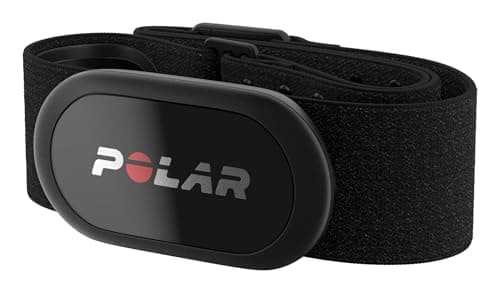
Polar H10
8.6/10ResearchedThe criterion device in the peer-reviewed ring study and the comparison device in the RingConn Gen 2 preprint. About 400 hours on a coin cell, Bluetooth plus ANT+ plus 5 kHz, WR30, and one stored session of up to 30 hours.
$104.45Amazon#ad · Price as of November 4, 2026 · How we make money for the link to Polar H10
Best rechargeable strap
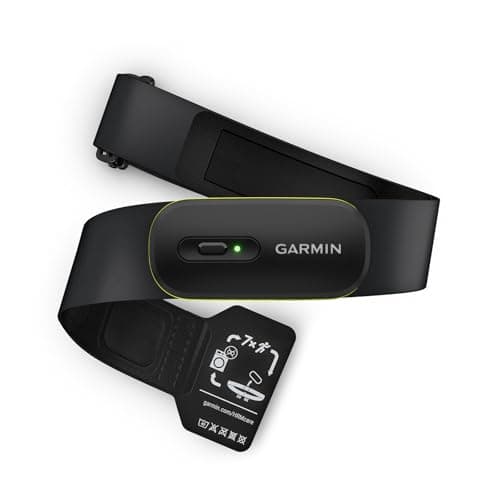
Garmin HRM 600
7.6/10ResearchedBuy this instead if you refuse consumable batteries: rechargeable, up to two months at an hour a day, 5 ATM, two strap sizes, and it records solo and syncs later. Not the device in the published studies.
$157.69Amazon#ad · Price as of November 4, 2026 · How we make money for the link to Garmin HRM 600
Rechargeable strap for app-based HRV checks
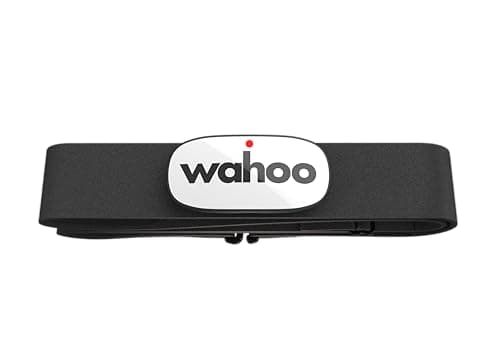
Wahoo TRACKR Heart Rate
6.6/10ResearchedRechargeable over USB-C with over 100 hours claimed, Bluetooth and ANT+. The weakest of the three for auditing a ring, because HRV needs a third-party app - Wahoo's own app will not record it.
$97.75Amazon#ad · Price as of November 4, 2026 · How we make money for the link to Wahoo TRACKR Heart Rate
All three scored on our rubric, with the weights published on our methodology page, are on best chest strap for HRV.
The verdict
As a product, the Polar H10 is unglamorous and slightly dated: a coin cell, a fabric strap and three radios. As the answer to “is my ring lying to me?”, it is the only purchase on this site that settles an argument instead of starting one. For a buyer who refuses a monthly fee precisely because they want to own their own data, a one-off, subscription-free device that checks the expensive thing already on their finger is close to the definition of good value.
Buy it if you own a ring and want to know what its numbers are worth. Buy the Garmin if you want a strap for training first and a ring audit second. Buy neither if the strap will sit unused - in that case spend the money on the ring you actually wear, ranked on best smart ring without a subscription.
How we scored this
How these picks were chosen
Every pick here is labeled Researched: chosen from each brand's fee policy, spec sheet, sizing and warranty pages, and the published studies that measured the ring (or its predecessor) against a chest strap, an ECG or a sleep lab, then scored on a public rubric. Every figure links to where it came from, and maker performance numbers are labeled “maker's claim,” so you can see exactly what you're paying for before you buy.
Scores are editorial judgments built from that documented research. Commissions never set a score or decide a pick. The rubric and its weights are published.
What changed
- Published.
Questions
Frequently asked
Is the Polar H10 accurate?
Does the Polar H10 need a subscription?
How long does the Polar H10 battery last?
Can the Polar H10 record without a phone?
Do I need a chest strap if I already own a smart ring?
Receipts
Sources
- Polar: H10 heart rate sensor product page (checked 2026-09-19)
- Polar US: H10 heart rate sensor store page ("Water resistance: WR30"; "Memory One session, up to 30 hours"; Pro Strap XS-S 60-68 cm, M-XXL 68-87 cm and XXXL 82-114 cm, Soft Strap M-XXL 65-96 cm; "Up to 400h"; "the most accurate sensor in Polar's history"; "When others want to validate the accuracy of their devices, they use Polar H10"; compatibility with "over 150" fitness apps) (checked 2026-10-16)
- Polar: H10 user manual, technical specifications (checked 2026-09-19)
- Polar: H10 user manual, getting started ("To get started with your Polar H10, pair it with the Polar Flow app first"; "the H10 transmits your heart rate signal simultaneously via Bluetooth and ANT+" and "both connections are set on by default"; "It is recommended to use the Polar Flow app but it is also possible to use other applications") (checked 2026-10-16)
- Dial et al., Physiological Reports 2025: nocturnal resting HR and HRV in consumer wearables vs Polar H10 (checked 2026-09-19)
- Dial et al., Physiological Reports 2025, open-access full text with per-device results (PMC12367097) (checked 2026-09-21)
- Tao et al., Research Square preprint 2026: ring PPG (RingConn Gen 2) vs chest strap in shooting athletes (not peer-reviewed) (checked 2026-09-19)
- Garmin: HRM 600 owner's manual, specifications (checked 2026-09-19)
- Wahoo: TRACKR heart rate chest strap monitor page (checked 2026-09-19)
- Oura Support: Heart Rate Variability ("Oura takes five-minute samples, not just a single reading, throughout the night"; the Readiness figure is "the mean of all five-minute samples taken while you sleep"; typical values run "from under 20 to over 200 milliseconds" and you should "compare your current HRV only against your own historical trends, not against others") (checked 2026-10-09)
- Apple Developer: HealthKit heartRateVariabilitySDNN (the only HRV quantity type Apple Health stored through watchOS 26 — the standard deviation of normal-to-normal beat intervals, in milliseconds; available since iOS 11.0 / watchOS 4.0) (checked 2026-10-09)
- Amazon search results for "Polar H10 heart rate sensor" (listing titles) (checked 2026-09-19)
Every figure on this page is traceable. Fees come from each brand's own policy pages (with the date we checked), specs from maker pages and listings, and accuracy claims from named, published studies. Hardware prices are set by Amazon and change daily, so we link them live instead of printing them. Read the full method.