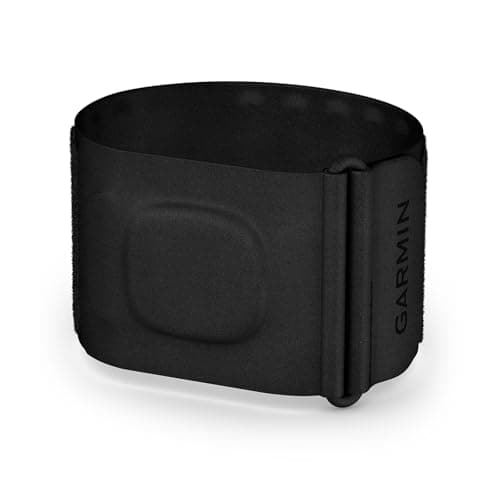
The contenders
Side by side
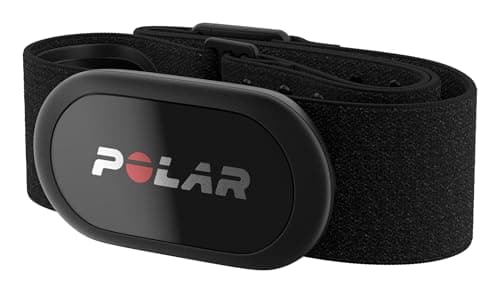
Buy this to check a ring
Polar H10
8.6/10The criterion measurement in Dial et al. 2025, the one peer-reviewed study that put consumer rings against a chest strap. Bluetooth, ANT+ and 5 kHz, about 400 hours on a coin cell, and 30 hours of onboard memory.
$84.74Amazon#ad · Price as of October 11, 2026 · How we make money for the link to Polar H10
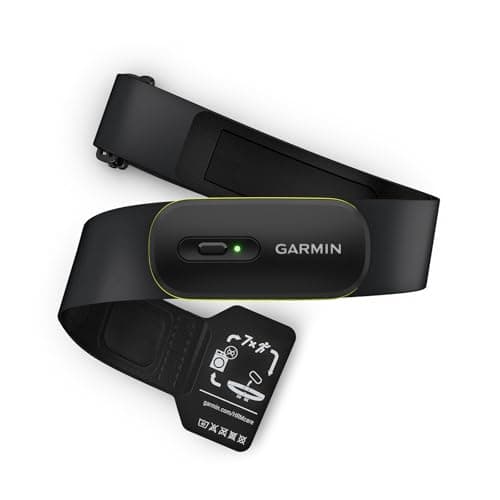
Buy this to train with
Garmin HRM 600
7.6/10Rechargeable lithium-ion rated at up to two months at an hour a day, real-time heart rate and HRV, 5 ATM, two strap sizes, and it records an activity on its own and syncs later. Not the device the ring studies used.
$157.90Amazon#ad · Price as of October 11, 2026 · How we make money for the link to Garmin HRM 600
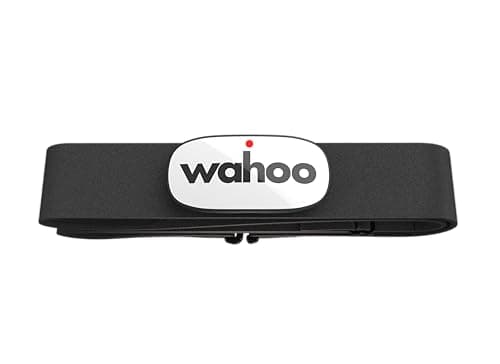
The rechargeable middle option
Wahoo TRACKR Heart Rate
6.6/10USB-C charging, over 100 hours a charge, Bluetooth and ANT+. It sends HRV to a compatible app, but Wahoo's own app does not display or record HRV - which makes it the weakest of the three for this specific job.
$98.39Amazon#ad · Price as of October 11, 2026 · How we make money for the link to Wahoo TRACKR Heart Rate
The one difference that matters
Both of these are good chest straps. Both read the electrical signal of your heartbeat rather than inferring it from light through tissue, which is why both are a tier above any ring or watch for heart rate during movement. For the job this site cares about - finding out whether your ring's numbers are trustworthy - there is one asymmetry, and it is not a specification.
The Polar H10 is the device researchers reached for. It was the criterion measurement in Dial et al. 2025, which put consumer wearables including Oura rings against a strap overnight (Physiological Reports, open-access full text with per-device results at PMC). Garmin's HRM 600 is newer and is not the device in that literature. Neither fact makes the Garmin worse at measuring a heartbeat; it just means a Garmin-based comparison at home is your own experiment, while an H10-based one repeats theirs.
The protocol itself - seven nights, both devices, what to write down - is on test your ring against a chest strap. What the published comparisons found is on smart ring HRV vs a chest strap.
Specs side by side
| Published spec | Polar H10 | Garmin HRM 600 | Wahoo TRACKR Heart Rate |
|---|---|---|---|
| Used as a study reference | Criterion device in Dial et al., Physiological Reports 2025 ("The Polar H10 was used as the criterion measurement") | — | — |
| Sensing | — | Real-time heart rate and heart rate variability | — |
| Battery | CR 2025 coin cell; about 400 hours (maker's claim) | Rechargeable lithium-ion; up to 2 months at 1 hour a day (maker's claim) | Rechargeable lithium-ion over USB-C; "over 100 hours" in normal conditions (maker's claim) |
| Connectivity | Bluetooth, ANT+ and 5 kHz | — | Bluetooth and ANT+ |
| Memory | Stores one training session of up to 30 hours | Records activity on its own and syncs afterward | — |
| Water resistance | WR30 | 5 ATM | IPX7 |
| Strap sizes | — | XS-S and M-XL | — |
| HRV | — | — | HRV "with a compatible app"; Wahoo's own app and bike computers don't display or record HRV (per a Wahoo support answer) |
| US availability | Listed on Amazon.com | Listed on Amazon.com | Listed on Amazon.com |
| Score | 8.6/10 | 7.6/10 | 6.6/10 |
Coin cell vs rechargeable
This is the practical trade and it genuinely splits buyers. The H10 runs on a CR 2025 coin cell rated at about 400 hours in Polar's manual (Polar). You never charge it, you never find it flat, and once every year or two you swap a coin cell. The Garmin uses a rechargeable lithium-ion cell rated at up to two months at an hour a day (Garmin) - fewer consumables, one more thing on the charging pile.
For a seven-night ring comparison, the coin cell is the better behaviour: continuous overnight recording is a lot more hours than an hour a day, and a strap that cannot run flat mid-test is one fewer way for the test to fail. For daily training, the rechargeable is the nicer object.
HRV: what each one hands over
HRV is the metric most ring owners actually want to check, and it needs beat-to-beat (R-R) intervals rather than a smoothed heart rate. Both the H10 and the HRM 600 provide that to HRV apps - Garmin's press material lists real-time heart rate and heart rate variability (Garmin). The Wahoo is the one with a caveat: HRV works “with a compatible app”, and Wahoo's own app and bike computers do not display or record it (Wahoo).
One more thing worth knowing before you compare numbers: HRV is not a single quantity. Oura reports rMSSD averaged from five-minute samples across the night (Oura Support), while Apple Health's only HRV type is SDNN (Apple Developer). Compare like with like, or your test measures the metric definitions rather than the hardware.
Ecosystem and connectivity
The H10 carries Bluetooth, ANT+ and 5 kHz, which is as broad as this category gets: phones, watches, gym equipment and swim-capable 5 kHz receivers. The HRM 600's advantages concentrate around Garmin hardware, and it records an activity by itself and syncs afterwards, so a phone can stay in a locker (Garmin). The H10 can also store one session of up to 30 hours on its own.
If you already own a Garmin watch, the HRM 600 slots in with less friction and the Garmin-ring question is answered on best smart ring for Garmin users. If you own nothing else, the H10 talks to more things.
Fit, comfort and the wet-strap rule
Garmin publishes two strap sizes, XS-S and M-XL. Polar does not list sizes on the technical-specifications page we cite, so that row is a dash rather than a guess. Both are rated for water - 5 ATM for the Garmin, WR30 for the Polar.
The thing that ruins chest-strap data is a dry electrode. Wet the contact area before you put it on, every time. A strap that reads badly for the first ten minutes of every night will add noise to exactly the part of a ring comparison you care about.
Where the Wahoo lands
The TRACKR is rechargeable over USB-C, claims over 100 hours per charge, and carries Bluetooth and ANT+. It is a perfectly good training strap. It is the weakest of the three for checking a ring, for two reasons: it is not the device in the published studies, and its HRV depends entirely on a third-party app because Wahoo's own will not record it. If it is what you already own, use it - just read the HRV numbers knowing where they came from.
The verdict
- Checking a smart ring: Polar H10. It is the criterion device in the research, it cannot run flat mid-test, and it stores a session on its own.
- Training, with a Garmin watch: HRM 600. Rechargeable, records solo, and fits the ecosystem you already bought into.
- You refuse to buy coin cells: HRM 600 or the Wahoo. Both are rechargeable; only the Garmin gives you HRV in its own ecosystem.
- You want both jobs from one strap: the H10 does the training job fine, so if you only buy one, buy that one. The roundup of all three, scored, is on best chest strap for HRV.
In detail
The contenders, in full
Buy this to check a ring
Polar H10
The criterion measurement in Dial et al. 2025, the one peer-reviewed study that put consumer rings against a chest strap. Bluetooth, ANT+ and 5 kHz, about 400 hours on a coin cell, and 30 hours of onboard memory.
Published specsResearched · every value sourced
| Used as a study reference | Criterion device in Dial et al., Physiological Reports 2025 ("The Polar H10 was used as the criterion measurement") |
|---|---|
| Battery | CR 2025 coin cell; about 400 hoursMaker's claim |
| Connectivity | Bluetooth, ANT+ and 5 kHz |
| Memory | Stores one training session of up to 30 hours |
| Water resistance | WR30 |
| US availability | Listed on Amazon.com |
How the 8.6 score breaks down
- Reference-grade evidence (30%)
- 10
- HRV & app support (25%)
- 8
- Connectivity (15%)
- 9
- Battery & charging (15%)
- 8
- Fit & comfort (15%)
- 7
What the specs support
- The reference device in the one peer-reviewed ring-vs-chest-strap study we found
- Bluetooth and ANT+, so it pairs with phones, watches and gym gear
- Coin-cell battery rated around 400 hours: no charging
- Can store one session on its own, so you don't need a phone nearby
Where it falls short
- Coin cell needs replacing eventually
- A chest strap is less comfortable to sleep in than a ring, so it's a checking tool, not a replacement
Skip this if…
…You'd rather never swap a coin cell: Garmin's HRM 600 is rechargeable.
#ad · Price as of October 11, 2026 · How we make money for the link to Polar H10
Buy this to train with
Garmin HRM 600
Rechargeable lithium-ion rated at up to two months at an hour a day, real-time heart rate and HRV, 5 ATM, two strap sizes, and it records an activity on its own and syncs later. Not the device the ring studies used.
Published specsResearched · every value sourced
| Sensing | Real-time heart rate and heart rate variability |
|---|---|
| Battery | Rechargeable lithium-ion; up to 2 months at 1 hour a dayMaker's claim |
| Water resistance | 5 ATM |
| Memory | Records activity on its own and syncs afterward |
| Strap sizes | XS-S and M-XL |
| US availability | Listed on Amazon.com |
How the 7.6 score breaks down
- Reference-grade evidence (30%)
- 6
- HRV & app support (25%)
- 8
- Connectivity (15%)
- 8
- Battery & charging (15%)
- 9
- Fit & comfort (15%)
- 8
What the specs support
- Rechargeable: no coin cells
- Stores a session and syncs later, so a phone can stay in the locker
- Two strap sizes
Where it falls short
- Not the device used in the published ring studies (the Polar H10 was)
- Garmin-centric features work best with a Garmin watch or bike computer
Skip this if…
…Your only goal is to match the published research setup: that was a Polar H10.
#ad · Price as of October 11, 2026 · How we make money for the link to Garmin HRM 600
The rechargeable middle option
Wahoo TRACKR Heart Rate
USB-C charging, over 100 hours a charge, Bluetooth and ANT+. It sends HRV to a compatible app, but Wahoo's own app does not display or record HRV - which makes it the weakest of the three for this specific job.
Published specsResearched · every value sourced
| Battery | Rechargeable lithium-ion over USB-C; "over 100 hours" in normal conditionsMaker's claim |
|---|---|
| Connectivity | Bluetooth and ANT+ |
| HRV | HRV "with a compatible app"; Wahoo's own app and bike computers don't display or record HRV (per a Wahoo support answer) |
| Water resistance | IPX7 |
| US availability | Listed on Amazon.com |
How the 6.6 score breaks down
- Reference-grade evidence (30%)
- 5
- HRV & app support (25%)
- 6
- Connectivity (15%)
- 9
- Battery & charging (15%)
- 8
- Fit & comfort (15%)
- 7
What the specs support
- Rechargeable over USB-C: no coin cells
- Bluetooth and ANT+
- Over 100 hours per charge (maker's claim)
Where it falls short
- HRV needs a third-party app; Wahoo's app won't record it
- No session memory stated by Wahoo
- Not the reference device in the published ring studies
Skip this if…
…You want to check HRV inside the strap maker's own app: Wahoo's app doesn't record it.
#ad · Price as of October 11, 2026 · How we make money for the link to Wahoo TRACKR Heart Rate
How we scored this
How these picks were chosen
Every pick here is labeled Researched: chosen from each brand's fee policy, spec sheet, sizing and warranty pages, and the published studies that measured the ring (or its predecessor) against a chest strap, an ECG or a sleep lab, then scored on a public rubric. Every figure links to where it came from, and maker performance numbers are labeled “maker's claim,” so you can see exactly what you're paying for before you buy.
Scores are editorial judgments built from that documented research. Commissions never set a score or decide a pick. The rubric and its weights are published.
What changed
- Published.
Questions
Frequently asked
Which chest strap do researchers use for heart rate?
Is the Garmin HRM 600 more accurate than the Polar H10?
Do both straps give HRV to apps?
Which strap lasts longer per charge?
Do I need a chest strap if I own a smart ring?
Receipts
Sources
- Polar: H10 heart rate sensor product page (checked 2026-09-19)
- Polar: H10 user manual, technical specifications (checked 2026-09-19)
- Garmin: HRM 600 product page (checked 2026-09-19)
- Garmin: HRM 600 owner's manual, specifications (checked 2026-09-19)
- Garmin press release: Garmin unveils the HRM 600 (checked 2026-09-19)
- Wahoo: TRACKR heart rate chest strap monitor page (checked 2026-09-19)
- Dial et al., Physiological Reports 2025: nocturnal resting HR and HRV in consumer wearables vs Polar H10 (checked 2026-09-19)
- Dial et al., Physiological Reports 2025, open-access full text with per-device results (PMC12367097) (checked 2026-09-21)
- Oura Support: Heart Rate Variability ("Oura takes five-minute samples, not just a single reading, throughout the night"; the Readiness figure is "the mean of all five-minute samples taken while you sleep"; typical values run "from under 20 to over 200 milliseconds" and you should "compare your current HRV only against your own historical trends, not against others") (checked 2026-10-09)
- Apple Developer: HealthKit heartRateVariabilitySDNN (the only HRV quantity type Apple Health stored through watchOS 26 — the standard deviation of normal-to-normal beat intervals, in milliseconds; available since iOS 11.0 / watchOS 4.0) (checked 2026-10-09)
Every figure on this page is traceable. Fees come from each brand's own policy pages (with the date we checked), specs from maker pages and listings, and accuracy claims from named, published studies. Hardware prices are set by Amazon and change daily, so we link them live instead of printing them. Read the full method.