Not medical advice. Smart rings are consumer wellness devices, not diagnostic tools, unless a specific feature has regulatory authorization (we name it where one exists). This page reports what published studies and makers state, with sources. If a reading worries you, talk to a clinician. Our health-content rules.
The usual cause isn't allergy
A smart ring is worn continuously, including in the shower, at the sink and in bed. That creates the conditions dermatology textbooks associate with irritant rather than allergic reactions: a non-breathing object pressed against skin, with water, soap residue and sweat trapped underneath it for days on end. The clue is the pattern. Irritation from occlusion usually shows up as a ring-shaped band of redness that improves within a day or two of taking the ring off and drying the skin.
Allergic contact reactions to metals exist and are real, but they are a smaller slice of the problem than the internet suggests - and a ring that has been fine for six months and then becomes itchy during a humid week is far more likely to be a moisture story.
What actually touches your skin
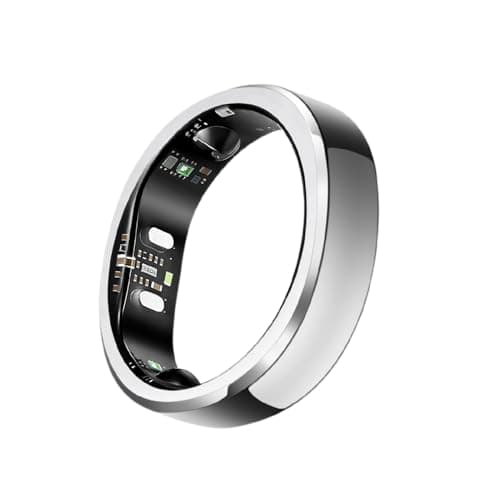
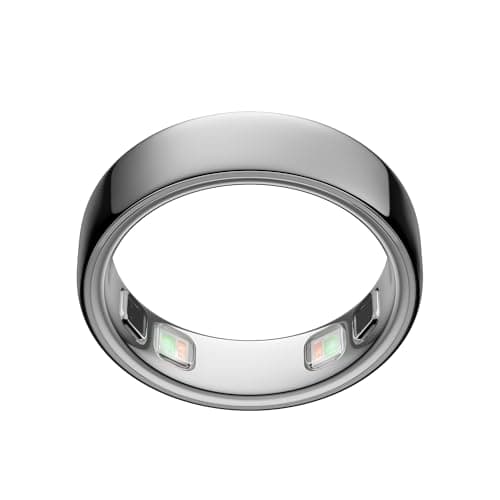
This is the detail most roundups miss. The outside of a smart ring is usually titanium. The inside - the surface against your finger - is frequently not. It has to be transparent to the optical sensors, so it is typically a polymer or resin window, and that is the material in contact with your skin for most of the ring's circumference.
RingConn says it outright for the Gen 2: “titanium alloy with medical-grade epoxy resin” (RingConn). Oura's safety page refers to “the molding polymer used in the Oura Ring” when discussing solvent exposure (Oura Support). So if you are trying to work out what your skin is reacting to, “titanium” on the box is not the full answer.
Published materials, brand by brand
And the rest of the rings we cover, as their makers state them:
- Oura Ring 5: “titanium exterior and interior”, from 2 grams depending on size (Oura) - the one ring that claims titanium on both surfaces.
- RingConn Gen 3: titanium, 2.3 mm at its thinnest, per The Gadgeteer's review (The Gadgeteer).
- Samsung Galaxy Ring: a titanium frame (Samsung).
- Ultrahuman Ring PRO: a titanium unibody, with “ProRelease Technology” so the ring can be cut off more easily if a finger swells (Ultrahuman). Ultrahuman's Ring AIR FAQ is the only place any brand uses the word hypoallergenic about an inner surface, describing titanium with a tungsten carbide carbon coating (Ultrahuman) - note the AIR is not sold to US buyers.
- Circular Ring 2: titanium with a PVD coating (Circular).
What Oura's safety page says
Oura publishes the clearest guidance in the category, and it applies to any ring. On skin: “As with any ring or wearable device, some people may notice skin changes where the ring sits against the skin.” If you see “redness, itching, flaking, or sensitivity under or around the ring”, the instruction is: “Remove the ring and let the skin rest.” Oura also gives a temperature range - extended exposure below -20°C / -4°F or above 60°C / 140°F “may lead to battery damage” - and notes that the molding polymer “can handle short exposure to acetone” (Oura Support).
Two useful implications. First, taking the ring off for a day or two is the manufacturer's own first-line advice, so you are not doing anything wrong by interrupting your streak. Second, nail-polish remover will not destroy the ring - but hand sanitiser and soap residue sitting under it all day is still the thing to manage.
The routine that usually fixes it
- Take it off and let the skin recover. One to three days. If the redness clears, you have your answer: irritation, not allergy.
- Dry both the finger and the ring. Every time your hands get wet. This is the single highest-value habit, especially for anyone whose hands are in water all day - see best smart ring for nurses.
- Rotate it. A quarter turn a few times a day stops the same strip of skin staying damp and compressed. Check your brand's guidance on sensor orientation first.
- Rinse the ring itself. Soap and lotion collect in the inner groove. Warm water, dry thoroughly.
- Check the fit. Snug, not tight, and not loose enough to slide. Both extremes cause problems - tight traps moisture and compresses, loose rubs. Our sizing guide covers how brands want you to measure.
- Swap fingers or hands. Giving one finger a fortnight off usually settles it, and the accuracy implications of moving it are on which finger should you wear a smart ring on.
- Skip the lotion under the ring. Occlusive creams under an occlusive object is the one combination to avoid.
What to look for if you react
- A published inner-surface material. Most brands name the shell and skip the part that touches you. RingConn's “medical-grade epoxy resin” and Oura's “titanium exterior and interior” are the two most informative statements in the category.
- A generous return window. If you are buying partly to test your own skin, the return policy is the spec that matters - collected on warranty and returns.
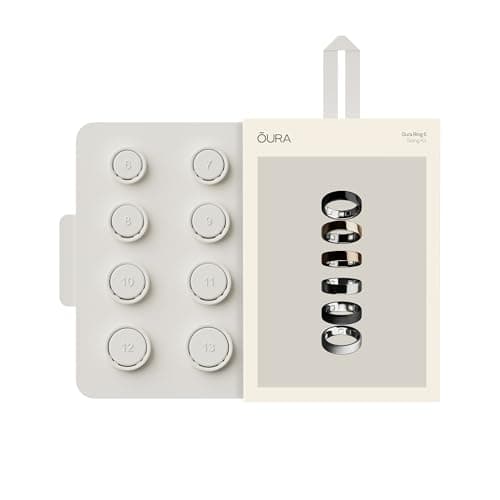
- A free sizing kit. Wearing the plastic sizing ring for a few days is also a crude patch test for occlusion: if your skin objects to a plastic dummy, a real ring will not be better.
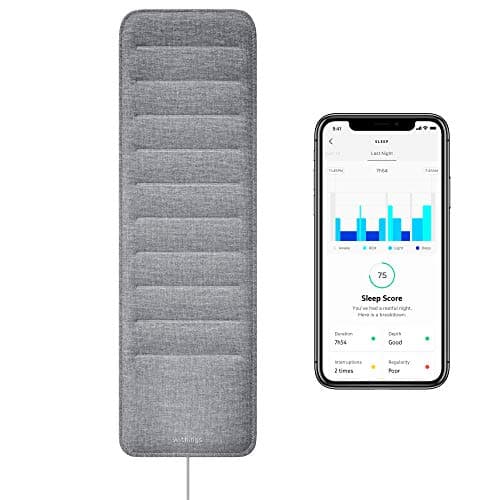
- An alternative that is not a ring at all. If skin is the blocker, an under-mattress mat tracks your nights with nothing on your body - best under-mattress sleep trackers.
What we'd buy
Our picks for this job
The three rings with the most informative material statements
Judged on what the maker is willing to publish about what touches your skin, plus fit options and return terms. Amazon prices move daily, so check the live price on each before you buy.
Best evidence, if you'll pay the membership
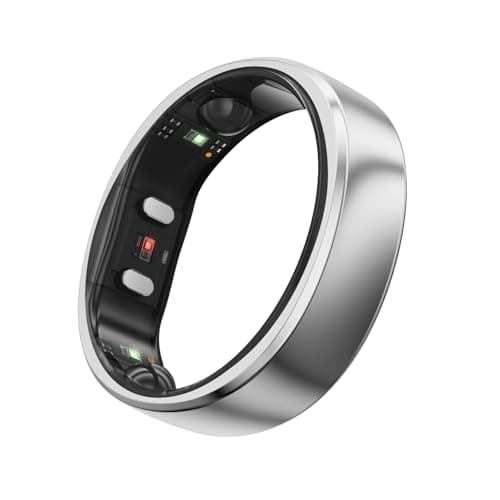
Oura Ring 5
Membership required5.8/10ResearchedThe only ring claiming titanium on both the exterior and the interior, from 2 grams, waterproof to 100 m. It also carries a required membership, which is the trade on every Oura page here.
$399.00Amazon#ad · Price as of October 11, 2026 · How we make money for the link to Oura Ring 5
Best overall with no subscription
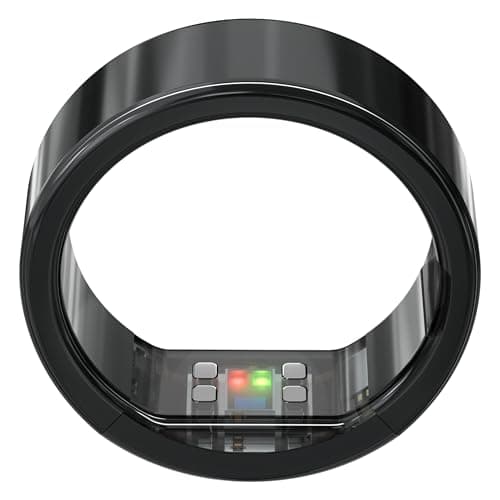
RingConn Gen 2
No subscription8.2/10ResearchedThe most specific statement in the category - titanium alloy with medical-grade epoxy resin - plus no subscription, a free sizing kit and sizes 6-14. IP68 to 100 m.
$299.00Amazon#ad · Price as of October 11, 2026 · How we make money for the link to RingConn Gen 2
Longest claimed battery with no required fee
Ultrahuman Ring PRO
No subscription6.9/10ResearchedTitanium unibody with a published removal design for a finger that swells, free sizing kit, sizes 5-14, no required fee. Ultrahuman's AIR documentation is also the only place a brand describes a hypoallergenic inner surface.
$479.00Amazon#ad · Price as of October 11, 2026 · How we make money for the link to Ultrahuman Ring PRO
When to see a doctor
- The reaction does not improve after a few days without the ring.
- The skin is broken, weeping, blistered or spreading beyond where the ring sat.
- You suspect an infection - increasing pain, heat, swelling or pus.
- The finger is swelling and the ring is becoming difficult to remove. Treat that as urgent.
- You want to know whether you are actually allergic to a metal. That is a patch test, not a search result.
Mistakes to avoid
- Pushing through to protect a data streak. The maker's own advice is to take it off. A gap in your chart is not worth damaged skin.
- Sizing up so it stops rubbing. A loose ring rubs more, reads worse, and gets lost.
- Assuming titanium means inert. The inside of most rings is not titanium, and no brand publishes a full alloy composition.
- Putting a silicone cover over irritated skin. A sleeve helps with scratches in the gym; it makes moisture worse. The gym use case is on best smart ring for weightlifting.
- Buying a second ring before testing the first properly. One week off, one week on with a drying routine, tells you more than a new purchase.
How we scored this
How these picks were chosen
Every pick here is labeled Researched: chosen from each brand's fee policy, spec sheet, sizing and warranty pages, and the published studies that measured the ring (or its predecessor) against a chest strap, an ECG or a sleep lab, then scored on a public rubric. Every figure links to where it came from, and maker performance numbers are labeled “maker's claim,” so you can see exactly what you're paying for before you buy.
Scores are editorial judgments built from that documented research. Commissions never set a score or decide a pick. The rubric and its weights are published.
What changed
- Published.
Questions
Frequently asked
Why is my skin red and itchy under my smart ring?
Are smart rings hypoallergenic?
What is the inside of a smart ring made of?
Can I wear a smart ring in the shower if my skin is sensitive?
What should I buy if I can't wear a ring at all?
Receipts
Sources
- Oura Support: Product safety and use (battery, swelling guidance) (checked 2026-09-19)
- Oura: Oura Ring 5 store page (battery, water rating, sizes, HSA/FSA) (checked 2026-09-19)
- Oura blog: how waterproof is Oura Ring 5 (IP68, 100 m, automatic swim detection, scuba caveat) (checked 2026-09-26)
- RingConn: Gen 2 product page (checked 2026-09-19)
- The Gadgeteer: RingConn Gen 3 review (June 12, 2026) (checked 2026-09-19)
- Samsung US: Galaxy Ring product page (checked 2026-09-19)
- Ultrahuman US: Ring FAQ (ProRelease Technology, BLE 5.3) (checked 2026-09-19)
- Ultrahuman: Ring AIR FAQ (warranty, battery aging, compatibility) (checked 2026-09-19)
- Ultrahuman US: Ring PRO buy page (price, ship date, subscription, battery, sizes) (checked 2026-09-19)
- Circular: Circular Ring 2 product page (checked 2026-09-19)
- Oura Support: Warranty FAQs (1 year US; batteries excluded) (checked 2026-09-19)
Every figure on this page is traceable. Fees come from each brand's own policy pages (with the date we checked), specs from maker pages and listings, and accuracy claims from named, published studies. Hardware prices are set by Amazon and change daily, so we link them live instead of printing them. Read the full method.