Not medical advice. Smart rings are consumer wellness devices, not diagnostic tools, unless a specific feature has regulatory authorization (we name it where one exists). This page reports what published studies and makers state, with sources. If a reading worries you, talk to a clinician. Our health-content rules.
The answer, and why it surprises people
This query almost always comes from the same place: you wear an Oura Ring, you open the Health app expecting to find your overnight HRV beside everything else, and it is not there. So you go looking for the toggle you must have missed. There isn't one. Oura's own Member Care page for the Apple Health integration lists every data type it moves in each direction, and HRV appears on neither side of that page.
That is worth stating flatly, because the internet is full of answers that assume a sync bug. It is not a bug, a permissions problem, or an iOS version problem. Heart rate variability is simply not one of the things Oura hands to Apple Health. If you revoke and re-grant every permission in the Health app, you will get the same result.
What the integration actually moves
Here is the full picture from Oura's support page, so you can see exactly where the gap sits. Out of Oura and into Apple Health:
- Active energy
- Heart rate
- Height
- Mindful minutes
- Respiratory rate
- Sleep — duration, start time, end time and sleep stages
- Steps
- Weight
- Workouts, and workout routes
And in the other direction, from Apple Health into Oura:
- Active energy, resting energy
- Blood pressure
- Body fat percentage, lean body mass, weight, height
- Cardio fitness
- Date of birth, sex
- Heart rate
- Respiratory rate
- Sleep
- Steps
- Workouts, and workout routes
Note what this means in practice: Apple Health does get your Oura heart rate and your Oura sleep stages. If you were hoping to keep one timeline of nightly data in the Health app, you can — just not the HRV column. And respiratory rate crosses in both directions, which trips up a few people who assume anything cardiac-adjacent must include HRV. It doesn't.
One more caveat from the same page, worth knowing before you link anything: once you connect a third-party app like Apple Health, Oura says your “height, weight, age, and sex will be imported from those apps into Oura, and you will not be able to edit them” unless you unlink. If one of those fields is wrong in Apple Health, fix it there first.
The integration itself needs the membership
There is a second condition that matters a great deal on this site, because our reader is usually the person who refuses a monthly fee for their own data. Oura lists the Apple Health integration as available for “Gen2, Gen3 or later with active membership, iOS only.”
Every ring Oura sells today is a later generation than Gen2. So on a current ring, the whole integration — not the HRV part, the whole thing — is behind the paid plan, at $5.99 a month or $69.99 a year, $209.97 over three years. Let the membership lapse and you do not lose only the HRV you were never getting in Apple Health; you lose the sleep stages and heart rate that were crossing over, and you lose the HRV reading inside the Oura app too. Our page on Oura without a subscription walks through exactly what the free tier leaves on screen.
Oura's rMSSD is not Apple's SDNN
Suppose Oura did export HRV tomorrow. You still could not sensibly read it next to an Apple Watch number, because the two platforms calculate HRV differently from the same heartbeats.
Oura reports rMSSD — the root mean square of successive differences between consecutive beat intervals. Apple Health has one HRV quantity type, heartRateVariabilitySDNN, which is the standard deviation of normal-to-normal intervals. Both come out in milliseconds, which is exactly what makes the confusion so easy: two numbers, same unit, different arithmetic, different typical values.
The sampling differs too. Oura says it “takes five-minute samples, not just a single reading, throughout the night,” and the figure on your Readiness tab is “the mean of all five-minute samples taken while you sleep.” An Apple Watch writes SDNN from background readings taken across the day and night, plus whenever you run a Breathe session. So one number is a whole-night average built one way, and the other is a scatter of daytime and nighttime spot readings built another way.
Why mixing the two would mislead you
Oura's own guidance is the right frame here. It notes that typical HRV runs “from under 20 to over 200 milliseconds” between individuals, and tells you to “compare your current HRV only against your own historical trends, not against others.” If a 200-to-20 spread between two people makes cross-person comparison meaningless, a spread between two methods on your own wrist and finger is no safer.
This is the practical risk of wanting both numbers in one place. A single HRV series you watch over weeks is useful. Two series computed differently, plotted in the same app, invite you to read a method difference as a change in your physiology — and HRV is exactly the metric people over-read. The honest move is to pick one source and stay with it.
None of which says the ring's HRV is bad. Cao et al. (2022) compared Oura against ECG across nights at home and concluded it “could accurately measure nocturnal HR and RMSSD” — while finding high error on the more advanced frequency-domain measures. Our ring HRV against a chest strap page lays out those numbers, including the limits of agreement that a single night can still land inside.
What you can actually do about it
Four options, in the order most people should consider them.
- Read HRV where it lives. Oura computes it, Oura shows it, and the trend inside the Oura app is the one Oura's own research is about. For trend-watching, this is genuinely fine — it just needs the membership.
- Let the rest sync and stop fighting the gap. Heart rate, respiratory rate and staged sleep do cross into Apple Health. If your goal was one place for nightly data, you already mostly have it.
- Use the Apple Watch number as your Apple Health HRV. If you own a watch, SDNN is already being written for you at no charge. Treat it as its own series, not as a stand-in for the ring's.
- Measure HRV directly when it has to be right. A chest strap records beat-to-beat intervals rather than estimating them, which is the step up described below.
If you do run a ring and a watch together, set the Health app's source priority deliberately. Apple says that when several sources supply the same data type, the one at the top of the list wins. That matters for steps, sleep and heart rate — the types both devices write. It will never matter for HRV, because only one of them writes it.
Third-party apps: what they can and can't fix
You will find apps that offer to bridge the gap. Be clear about what is possible. An app can only write HRV into Apple Health if it can first get your HRV out of Oura, which means going through Oura's API with your authorization rather than through the Apple Health integration. That is a different route with different terms, and it still depends on an active membership for the underlying data to exist.
So a bridge app is not a hidden setting you overlooked. It is a separate piece of software, with its own access to your health data, solving a problem Oura chose not to solve. That may be a trade you want; it is not a trade to make by accident. And whatever lands in Apple Health that way is still rMSSD sitting in a field Apple built for SDNN, which is the mismatch described above, now buried one layer deeper.
If you want HRV you can trust
The uncomfortable truth behind this whole query is that an optical sensor on a finger or a wrist is estimating beat timing from a blood-volume waveform. It does that well at rest, which is why overnight figures hold up. It does it worst exactly when you are moving.
A chest strap reads the electrical signal instead and reports the intervals themselves. The Polar H10 is the one the research keeps using as the reference, including the preprint that put a RingConn Gen 2 beside it. If you want a number to make training decisions on, that is the tool — and our test your ring against a chest strap guide shows how to check your own ring against one over a week.
And if the membership is the part that grates — paying monthly to see a number your ring already measured — the no-fee rings are worth a look. A RingConn Gen 2 shows its HRV with no plan at all.
Our picks for this job
What to buy if HRV is the reason
A no-fee ring that shows HRV without a plan, the ring with the strongest HRV validation behind it, and the strap the studies measure against.
Best overall with no subscription
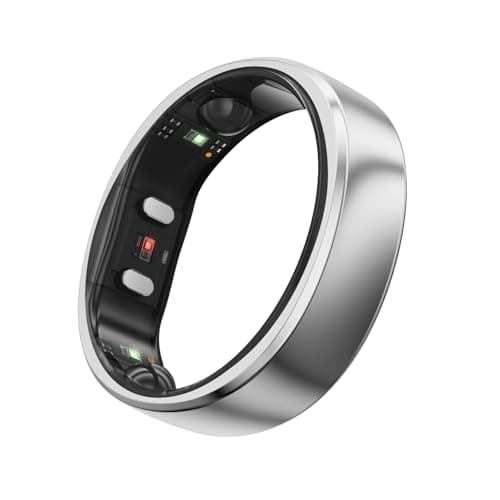
RingConn Gen 2
No subscription8.2/10ResearchedShows HRV with no subscription, and the only ring with a chest-strap HRV comparison of its own.
$299.00Amazon#ad · Price as of October 9, 2026 · How we make money for the link to RingConn Gen 2
Best evidence, if you'll pay the membership
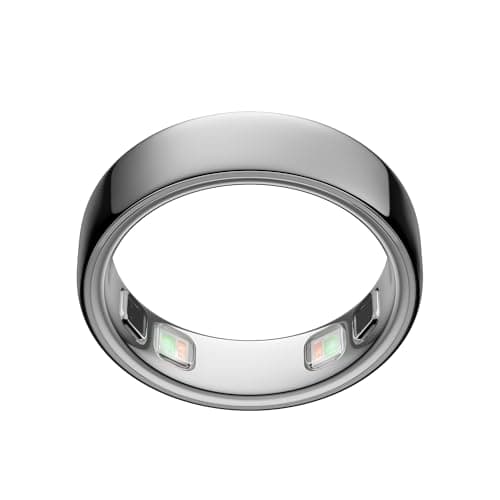
Oura Ring 5
Membership required5.8/10ResearchedThe best-validated HRV of any ring - but reading it, and the Apple Health link, both need the membership.
$399.00Amazon#ad · Price as of October 9, 2026 · How we make money for the link to Oura Ring 5
Best strap to check a ring against
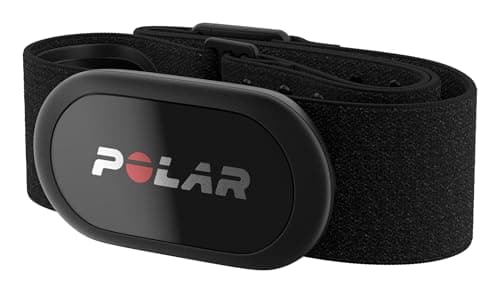
Polar H10
8.6/10ResearchedNot a ring. Records the beat-to-beat intervals directly, which is what the validation studies compare against.
$84.74Amazon#ad · Price as of October 9, 2026 · How we make money for the link to Polar H10
Mistakes people make chasing this
- Reinstalling the Oura app. It will not add a data type that is not in the integration. You will re-enter permissions for nothing.
- Assuming respiratory rate implies HRV. Respiratory rate syncs both ways. HRV does not. They are unrelated decisions by Oura.
- Comparing the ring's number to a watch's and concluding one is broken. rMSSD against SDNN will differ by construction.
- Reading a single night. Even where the ring is accurate on average, the limits of agreement mean one night can sit well off. Trends over weeks are the unit of meaning.
- Buying an Oura Ring mainly for HRV in Apple Health. That specific combination does not exist today at any price. If that was the plan, change the plan before you spend.
How we scored this
How these picks were chosen
Every pick here is labeled Researched: chosen from each brand's fee policy, spec sheet, sizing and warranty pages, and the published studies that measured the ring (or its predecessor) against a chest strap, an ECG or a sleep lab, then scored on a public rubric. Every figure links to where it came from, and maker performance numbers are labeled “maker's claim,” so you can see exactly what you're paying for before you buy.
Scores are editorial judgments built from that documented research. Commissions never set a score or decide a pick. The rubric and its weights are published.
What changed
- Published.
Questions
Frequently asked
Does the Oura Ring send HRV to Apple Health?
Is there a setting I need to turn on?
Why don't Oura's HRV and my Apple Watch's HRV match?
heartRateVariabilitySDNN, the standard deviation of normal-to-normal intervals, from readings taken through the day and night. Same millisecond unit, different arithmetic.Can I see Oura HRV without the membership?
Which smart rings show HRV with no subscription?
Is the ring's HRV accurate enough to act on?
Receipts
Sources
- Oura Member Care: Apple Health Integration ("Gen2, Gen3 or later with active membership, iOS only"; the export and import lists; the steps priority and locked profile-field caveats) (checked 2026-10-01)
- Oura blog: connect Oura and Apple Health ("Data go in both directions between Oura and Apple Health"; opt-in only) (checked 2026-10-01)
- Oura Support: Heart Rate Variability ("Oura takes five-minute samples, not just a single reading, throughout the night"; the Readiness figure is "the mean of all five-minute samples taken while you sleep"; typical values run "from under 20 to over 200 milliseconds" and you should "compare your current HRV only against your own historical trends, not against others") (checked 2026-10-09)
- Apple Developer: HealthKit heartRateVariabilitySDNN (the only HRV quantity type Apple Health stored through watchOS 26 — the standard deviation of normal-to-normal beat intervals, in milliseconds; available since iOS 11.0 / watchOS 4.0) (checked 2026-10-09)
- Apple Support: manage Health data ("If multiple sources contribute the same data type, the data source at the top will take priority over others"; the default priority order and how to reorder it) (checked 2026-10-01)
- Oura: integrations page (Apple Health, Google Health Connect, Strava; no Garmin listed) (checked 2026-09-29)
- Oura Support: Oura Membership (price, what works without it) (checked 2026-09-19)
- Oura: Oura Ring 5 store page (battery, water rating, sizes, HSA/FSA) (checked 2026-09-19)
- Cao et al., JMIR 2022: Oura nocturnal HR and HRV vs ECG (PMC8808342) (checked 2026-09-19)
- Liang et al., Sensors 2024: nocturnal HR, rMSSD and frequency HRV from the Oura Ring (PMC11644394) (checked 2026-09-19)
- Polar: H10 heart rate sensor product page (checked 2026-09-19)
- RingConn: Gen 2 product page (checked 2026-09-19)
Every figure on this page is traceable. Fees come from each brand's own policy pages (with the date we checked), specs from maker pages and listings, and accuracy claims from named, published studies. Hardware prices are set by Amazon and change daily, so we link them live instead of printing them. Read the full method.