Not medical advice. Smart rings are consumer wellness devices, not diagnostic tools, unless a specific feature has regulatory authorization (we name it where one exists). This page reports what published studies and makers state, with sources. If a reading worries you, talk to a clinician. Our health-content rules.
The short version
If you have searched for how apnea shows up on a RingConn, you have probably already worn the ring for a week and found nothing that looks like an apnea number. That is expected. Unlike sleep score, heart rate or SpO2, which the ring records every night by default, the apnea feature behaves like a short study you start on purpose: activate it, wear the ring for a defined run of nights, and read the report it produces at the end.
Three things decide whether it is any use to you: which RingConn you own, whether you set the cycle up correctly, and what you are willing to conclude from the output. RingConn's own wording on the third point is the most useful sentence on this page - its rings and apps “support general wellness and are not intended to diagnose, treat, cure or prevent a disease or medical condition,” and the ring “cannot diagnose the condition or rule it out” ( RingConn).
Which RingConns have it
Not all of them, which is the first reason a reader finds nothing in the app. RingConn's own feature comparison lists sleep apnea insights as included on the Gen 2 and the Gen 3, and says the Gen 2 Air “does not include that feature in the current comparison.” RingConn says the same thing on the Air's own page: it “covers key health tracking features, though it does not include sleep apnea monitoring.”
| Published spec | RingConn Gen 2 | RingConn Gen 3 | RingConn Gen 2 Air |
|---|---|---|---|
| Features | "Automatic sleep apnea monitoring" with a "90.7% Sleep Apnea Monitoring Accuracy" claim (maker's claim; not a diagnosis) (maker's claim) | Vascular Health Insights (blood pressure trends, optional manual cuff inputs), Sleep Apnea Pattern Insights, Smart Vibration Alerts, Women's Full-Cycle Predictions; "not a medical device" (maker's claim) | Core sleep, heart rate and activity tracking; "does not include sleep apnea monitoring" |
| Subscription | None ("No Subscriptions") | None ("No Subscription") | None |
| Battery (claimed) | 10-12 days (maker's claim) | Up to 14 days (11-14 days per charge) (maker's claim) | Up to 10 days; 90-minute fast charging (maker's claim) |
| Sizes | 6-14 | 10 sizes, 6-15; sizes differ from other RingConn rings, standard rings and other brands | 6-14; "The ring sizes for both Gen 2 and Gen 2 Air are the same" |
| Score | 8.2/10 | 8.1/10 | 7.7/10 |
The marketing language differs between the two models that have it, and the difference is worth noticing. The Gen 2 is sold with “automatic sleep apnea monitoring” and carries RingConn's “90.7% Sleep Apnea Monitoring Accuracy” claim. The Gen 3 is sold on “insights” - apnea and vascular pattern insights rather than a monitoring accuracy figure. Neither wording is a regulatory claim, and neither feature is FDA-cleared. Our Gen 3 vs Gen 2 comparison covers the rest of what separates them.
How the monitoring cycle works
RingConn's own diagram describes the flow in four steps: “Manual activation, wear for 3 nights, data collection, and detailed report.” In the body text it points you at the app rather than publishing the menu path - “Check the feature requirements in your installed app and follow its instructions” - and the path has moved at least once, so that is sensible advice rather than evasion.
When the feature first appeared it was a beta in app version 2.3.0 that you had to apply for: fill in a survey, wait for approval, then find a new “Research” tab at the bottom of the dashboard, start monitoring with a “Start monitoring” control before bed and slide it off in the morning (Gadgets & Wearables). Two conditions from that account still matter whatever the current menu looks like: your phone has to stay powered on and close by - within about two meters - for the whole night, and the cycle is a run of nights rather than a single one.
What the report actually shows
RingConn's published material frames the output around two sleep-medicine measures. Its diagram labels “AHI and ODI insights”, and the body text describes what the hardware can contribute: “RingConn's optical and motion measurements support nighttime oxygen, pulse, sleep and breathing-related estimates.” In plain terms:
- An AHI-style figure - breathing events per hour of sleep. In a sleep lab the apnea-hypopnea index counts pauses and partial collapses of the airway, scored from airflow, effort and oxygen channels. A ring has none of those channels, so what it reports is an estimate derived from pulse, oxygen and movement.
- An ODI-style figure - how often blood oxygen dips by a set amount per hour. This is the measurement a ring is best placed to attempt, because reflectance pulse oximetry is what the sensor does.
- Supporting nightly context - average and lowest overnight SpO2, pulse behavior and sleep structure, which is what makes a pattern readable rather than a single number.
We are deliberately not printing severity bands next to those numbers. The thresholds clinicians use are applied to a scored sleep study, not to a ring's estimate, and we could not verify a published RingConn statement mapping its output onto them. A number from your ring that looks alarming next to a chart you found online is not a diagnosis, and a clean number is not an all-clear.
One more limitation that is easy to miss: there is no home check for this feature. Heart rate and HRV you can audit yourself against a chest strap (our chest strap protocol shows how, and smart ring blood oxygen accuracy explains why a daytime SpO2 spot check tells you little). An apnea estimate can only be checked against a sleep study, which is exactly the thing the ring is standing in for.
The 90.7% figure, read properly
RingConn prints “90.7% Sleep Apnea Monitoring Accuracy” on the Gen 2 page. We could not tie that figure to a specific published study, so we treat it as the maker's number rather than a verified one, and we would want four answers before it meant much: measured against what reference, in whom, with what proportion of real cases missed, and published by whom. A single percentage answers none of those.
The independent picture comes from the category rather than the brand. A 2026 systematic review and meta-analysis by Jin et al. in the Journal of Translational Medicine pooled 28 articles on 11 finger-worn devices and concluded that these devices are useful for trends and as a triage tool for severe sleep apnea, not for diagnosis (Jin et al.). The emphasis on severe matters: the support in the literature is for flagging the worst cases, so a reassuring ring report has not cleared you of milder apnea.
What to do with a bad-looking result
Treat the report as a prompt, not a result. The useful thing a ring does here is notice a pattern you cannot see from inside your own sleep, and give you something concrete to bring to a clinician: dates, nights, overnight oxygen behavior, and the symptoms that sent you looking in the first place.
- Write down the symptoms, not just the numbers. Snoring, witnessed pauses, waking with a dry mouth or a headache, falling asleep during the day. Those carry more diagnostic weight than any consumer sensor.
- Save or screenshot the report. Apps change, and nightly history has a way of disappearing with an update or a new phone.
- Ask for the real test. Diagnosis runs through a sleep study, in a lab or as a home sleep apnea test, read by a clinician. RingConn says the same: “Diagnosis requires evaluation by a qualified healthcare professional.” Our smart ring vs sleep study comparison sets out what a lab measures that a ring cannot.
- Do not wait for the ring to agree with you. If the symptoms are there and the report looks clean, the symptoms win.
Which ring to buy for this
If apnea monitoring is a reason you are buying a ring at all, only two RingConns offer it, and both of them come with no subscription - which is the reason this site covers RingConn closely in the first place.
Our picks for this job
The two RingConns with an apnea feature
Both are subscription-free. The Gen 2 is the model with the monitoring claim and a chest-strap preprint; the Gen 3 is the newer hardware with pattern insights and a longer battery claim.
Best overall with no subscription
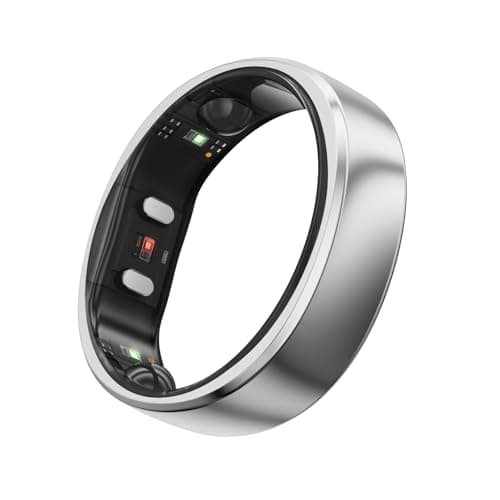
RingConn Gen 2
No subscription8.2/10ResearchedThe model RingConn markets with automatic sleep apnea monitoring and its own 90.7% claim, plus the only chest-strap comparison any ring here can point to.
$299.00Amazon#ad · Price as of November 4, 2026 · How we make money for the link to RingConn Gen 2
Longest battery with no subscription
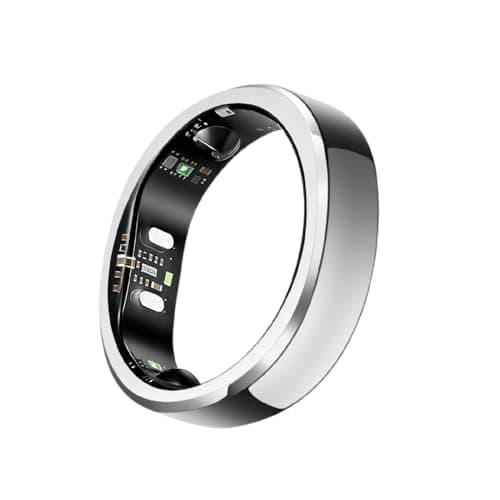
RingConn Gen 3
No subscription8.1/10ResearchedNewer hardware with apnea and vascular pattern insights and the longest battery claim in the lineup, but no published validation of its own yet.
$349.00Amazon#ad · Price as of November 4, 2026 · How we make money for the link to RingConn Gen 3
Do not buy the Gen 2 Air for this: RingConn excludes the feature from it, as our Gen 2 vs Gen 2 Air comparison sets out. And if you are choosing between RingConn and a cheaper no-fee ring that has no apnea feature at all, the trade-offs are in Amazfit Helio vs RingConn Gen 2. For the field ranked on this one job, see best smart ring for sleep apnea.
When a ring is the wrong tool
A ring is the most wearable thing in this category, and the least capable. If what you actually want is a measured answer rather than a pattern, two routes exist today that a ring does not match.
The first is the clinical one: a sleep study, or a home sleep apnea test ordered by a clinician. The one FDA-cleared, apnea-focused home device we cover is Withings' Sleep Rx mat, and it is prescription-only, which is itself the point - the cleared route runs through a doctor. Our best under-mattress sleep trackers covers that device class, including which of them charge a subscription.
The second is a different wearable. Samsung's FDA-cleared apnea feature was announced for the Galaxy Ring for fall 2026; our category page tracks whether it has actually appeared, and the Galaxy Ring review covers what else that ring asks of you (a Samsung Galaxy phone, for a start). Either way, the honest hierarchy for apnea runs: clinician first, cleared device second, ring third.
How we scored this
How these picks were chosen
Every pick here is labeled Researched: chosen from each brand's fee policy, spec sheet, sizing and warranty pages, and the published studies that measured the ring (or its predecessor) against a chest strap, an ECG or a sleep lab, then scored on a public rubric. Every figure links to where it came from, and maker performance numbers are labeled “maker's claim,” so you can see exactly what you're paying for before you buy.
Scores are editorial judgments built from that documented research. Commissions never set a score or decide a pick. The rubric and its weights are published.
What changed
- Published.
Questions
Frequently asked
Where does sleep apnea data appear in the RingConn app?
Which RingConn models support sleep apnea monitoring?
Does the RingConn need my phone nearby for apnea monitoring?
Is RingConn's sleep apnea monitoring FDA-cleared?
How accurate is RingConn's sleep apnea monitoring?
Can a RingConn rule out sleep apnea?
Receipts
Sources
- RingConn blog: can a smart ring detect sleep apnea (sleep apnea pattern insights listed as included on Gen 2 and Gen 3 while "Gen 2 Air does not include that feature in the current comparison"; the flow graphic labels "Manual activation, wear for 3 nights, data collection, and detailed report" and "AHI and ODI insights"; "Check the feature requirements in your installed app and follow its instructions"; RingConn "and its related applications support general wellness and are not intended to diagnose, treat, cure or prevent a disease or medical condition"; the ring "cannot diagnose the condition or rule it out" and "Diagnosis requires evaluation by a qualified healthcare professional") (checked 2026-10-23)
- Gadgets & Wearables: RingConn sleep apnea monitoring (the feature arrived as a beta in "version 2.3.0 of the smartphone app" reached through a survey and an approval wait, after which "you'll find a 'Research' tab at the bottom of your dashboard"; monitoring is started with a "Start monitoring" function before bed and stopped in the morning; the phone must stay powered on and within a maximum of 2 meters of the user all night; RingConn's stated goal at the time was to "even secure FDA approval for its pulse oximeter and OSAHS" features) (checked 2026-10-23)
- RingConn: Gen 2 product page (checked 2026-09-19)
- RingConn: Gen 3 product page (checked 2026-09-19)
- RingConn: Gen 3 features page (battery, charging case, vascular and sleep apnea insights) (checked 2026-09-19)
- RingConn: Gen 2 Air product page (checked 2026-09-19)
- Jin et al., J Translational Medicine 2026: finger-worn devices for sleep staging and apnea, meta-analysis (PMC13348430) (checked 2026-09-19)
- Withings Health Solutions: Sleep Rx (FDA-cleared, prescription, via healthcare professionals) (checked 2026-09-26)
- American Academy of Sleep Medicine: FDA clears Sleep Rx mat for OSA diagnosis (checked 2026-09-26)
- Android Authority: Samsung Galaxy Ring sleep apnea feature (July 22, 2026) (checked 2026-09-19)
- Gizmodo: Galaxy Ring gets FDA-cleared sleep apnea detection this fall (July 2026) (checked 2026-09-19)
Every figure on this page is traceable. Fees come from each brand's own policy pages (with the date we checked), specs from maker pages and listings, and accuracy claims from named, published studies. Hardware prices are set by Amazon and change daily, so we link them live instead of printing them. Read the full method.