Two problems, one complaint
“My RingConn battery is draining” describes two situations that have almost nothing in common, and sorting yours into the right one saves a lot of wasted effort:
- The ring is behaving normally and the expectation was built on a best-case number. This is most new-owner cases. Nothing is broken; the fix is knowing what the claim actually covers.
- The cell has lost capacity. This is the one-to-three-years-in case. It is real, it is gradual, and RingConn is explicit that it is not a warranty matter.
The tell is change over time. A ring that has always given you five days is a different problem from a ring that gave you eleven in its first month and gives you five now. Work out which sentence describes you before reading on.
What RingConn actually claims
RingConn's own figures, from its product and battery pages — and these are the maker's claims, not measurements of ours:
| Published spec | RingConn Gen 2 | RingConn Gen 2 Air | RingConn Gen 3 |
|---|---|---|---|
| Battery (claimed) | 10-12 days (maker's claim) | Up to 10 days; 90-minute fast charging (maker's claim) | Up to 14 days (11-14 days per charge) (maker's claim) |
| Charging case | Included; "Extended Up to 150 Days With Charging Case" (maker's claim) | Not listed | "Universal Charging Case"; 150+ days total with the case (maker's claim) |
| Sizes | 6-14 | 6-14; "The ring sizes for both Gen 2 and Gen 2 Air are the same" | 10 sizes, 6-15; sizes differ from other RingConn rings, standard rings and other brands |
| Warranty (US) | 1 year (non-EEA); normal battery capacity loss excluded; optional 2- or 3-year protection in the US | 1 year (non-EEA); normal battery capacity loss excluded; optional 2- or 3-year protection in the US | 1 year (non-EEA); normal battery capacity loss excluded; optional 2- or 3-year protection in the US |
On its battery article RingConn puts Gen 2 at “10 to 12 days on a single charge” and says that “in just an hour and a half, your ring is fully recharged.” It also describes a proprietary “EcoPower Tech” that it says reduces power usage “by up to 50%” while still sampling heart rate “every 2.5 minutes.”
Read that last part carefully, because it is the whole reason this page exists. A battery claim is produced under one particular pattern of sensor use. Turn on more frequent or more continuous measurement, and the number the marketing page quotes stops describing your ring. That is not RingConn being dishonest; it is what “up to” means, and every maker in this category does the same. Our smart ring battery life page sets each brand's claim beside its own caveats.
What RingConn says shortens a charge
These are the factors named on RingConn's battery page, not a generic list. Work through them in order, because the first one is invisible and the second is the most common:
- Ring size. RingConn notes that larger sizes carry slightly more capacity. A size 7 and a size 13 are not the same battery, so two people with the same ring and the same settings can honestly report different day counts. If you wear a small size, expect the lower end of any range.
- Background Bluetooth and syncing. RingConn names keeping Bluetooth or syncing active in the background as a drain. A ring that is repeatedly reconnecting, or syncing a large backlog, is working harder than one that syncs a few times a day.
- Heat. RingConn specifically lists extended exposure to direct sunlight, hot cars and humid environments. Heat is the one that does permanent damage rather than temporary drain — a summer of leaving the ring on a car dashboard is not a reversible mistake.
The 150-day number is the case
This causes more confusion than any other figure in RingConn's marketing. Gen 2 ships with a charging case, and RingConn advertises “Extended Up to 150 Days With Charging Case.”
That is not the ring's battery. It is the ring plus a case holding several further charges, so the headline means “how long before you need a wall outlet,” not “how long between charges.” The ring itself still wants topping up on RingConn's 10–12 day cycle; the case just means you can do it without finding a cable. If you bought expecting 150 days on the finger, the ring is not faulty — the number was answering a different question.
Worth knowing: the Gen 2 Air does not list a charging case at all, and RingConn rates it at up to 10 days with 90-minute fast charging. If you own the Air and were comparing against Gen 2's case figure, you were never going to match it.
Right after a firmware update
A drop immediately after a firmware or app update is the one case where waiting is genuinely the right move. The ring may be resyncing stored data, reconnecting more often than usual, or rechecking sensors, and the app may be rebuilding trends. None of that is the steady state.
Give it a few days of normal wear and a full charge cycle before you judge. If the ring still will not hold a charge after that, you have ruled out the most common false alarm and can treat what is left as a real measurement.
How to tell aging from a fault
Three questions separate them.
- Did it change gradually or suddenly? RingConn describes normal aging as gradual: “the ring needs charging more frequently” and “a full charge lasts fewer days than before.” A slide over many months is aging. A drop from eleven days to three over a fortnight, with no update and no heat event, is not the pattern RingConn describes as normal.
- Does it charge to 100% and hold it? If the ring will not reach a full charge, or drops a large chunk within hours of coming off the charger while idle, that is different from simply running out sooner.
- Is it the ring or the contacts? A ring that charges intermittently may be a contact problem, not a cell problem. The contacts on the ring and inside the case need to be clean and properly seated — worth checking before you conclude anything, because it is free.
What the warranty covers
This is the part worth knowing before you spend an afternoon on support chat. RingConn's battery page states that “rechargeable batteries are consumable components whose capacity naturally declines over time,” and that “routine battery replacement and normal capacity loss are not included in RingConn's standard warranty.”
The standard warranty itself, per the same page, “covers original components of new products for 1 year in non-EEA countries and 2 years in EEA countries from the delivery date.” In the United States that is the one-year term. RingConn also sells optional longer protection, and its product-protection FAQ says the plan “primarily covers accidental damage and product defects for the entire device,” with the battery “included as part of the overall device” and “not assessed as a separate component.”
The battery is not user-replaceable
RingConn is direct about this: “in most cases, a smart ring battery is not user-replaceable. Its battery, sensors, antenna, and electronics are tightly integrated inside a sealed enclosure.”
That sealed construction is also what delivers the IP68 rating and the 100-meter figure RingConn quotes, so it is a trade rather than an oversight. But it does mean the honest long-run answer for a degraded ring is a replacement device, not a replacement cell — and that is true of every ring on this site, not just RingConn. We cover the general version in smart ring battery lifespan, which is the page to read if you are trying to work out how many years a ring is really a purchase for.
What to actually do
In order, cheapest first:
- Clean and reseat the charging contacts. Free, takes a minute, and rules out the most-mistaken-for-battery fault.
- Charge fully, then log a week. One number each morning. This is the only way to separate a real trend from a bad week.
- If you just updated, wait for a full cycle. Then re-measure.
- Reduce what you asked for. If you turned on more frequent measurement, or the ring is syncing constantly, the claim never applied to that configuration.
- Keep it out of heat. Not a fix for damage already done, but it stops the next loss.
- Check your warranty date. Inside a year in the US and genuinely faulty? File. Gradual loss after two years? RingConn has told you in advance that this is not covered, so plan a replacement instead of expecting one.
If you are buying again
Two things are worth weighing if this ring is near the end of its useful life. First, battery life is the one specification where a charging case changes the lived experience more than the headline day count does — the case is why Gen 2 remains our top no-fee pick. Second, none of this costs a subscription on any RingConn ring, which is the reason the brand sits where it does on this site.
Our picks for this job
What to buy if the battery is done
The sealed build means a degraded ring is a replacement, not a repair. These are the no-fee options, plus the case that changes how often you look for an outlet.
Best overall with no subscription
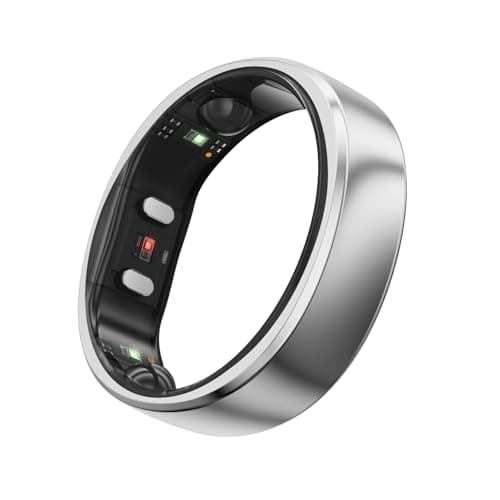
RingConn Gen 2
No subscription8.2/10Researched10-12 days claimed plus the case RingConn rates at up to 150 days, and no subscription on any tier.
$299.00Amazon#ad · Price as of October 9, 2026 · How we make money for the link to RingConn Gen 2
Longest battery with no subscription
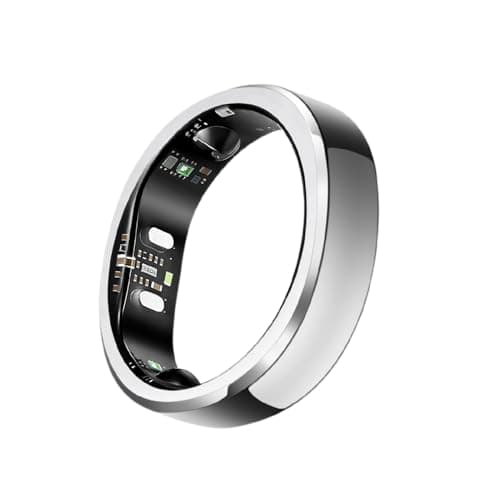
RingConn Gen 3
No subscription8.1/10ResearchedRingConn's newest, same no-fee terms. Check the current spec before assuming a longer charge.
$349.00Amazon#ad · Price as of October 9, 2026 · How we make money for the link to RingConn Gen 3
Oura owners who travel
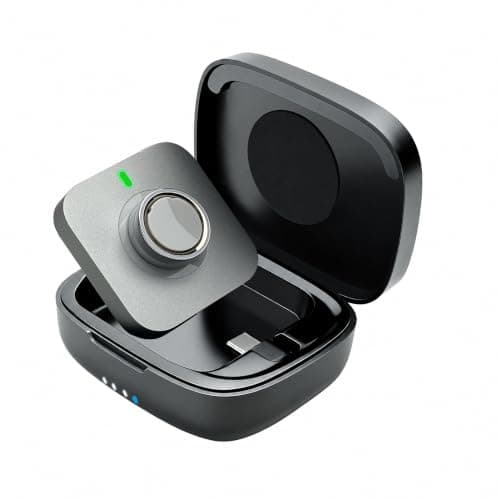
Portable charging case for Oura Ring Gen 3, 4 and 5 (third-party)
5.3/10ResearchedA case is the difference between charging weekly and charging seasonally. Check fit against your ring first.
$16.99Amazon#ad · Price as of October 9, 2026 · How we make money for the link to Portable charging case for Oura Ring Gen 3, 4 and 5 (third-party)
If you would rather not replace like for like, our best smart rings without a subscription roundup ranks every no-fee ring on what it costs to own over three years, and best smart ring for beginners covers what to check before a first purchase.
How we scored this
How these picks were chosen
Every pick here is labeled Researched: chosen from each brand's fee policy, spec sheet, sizing and warranty pages, and the published studies that measured the ring (or its predecessor) against a chest strap, an ECG or a sleep lab, then scored on a public rubric. Every figure links to where it came from, and maker performance numbers are labeled “maker's claim,” so you can see exactly what you're paying for before you buy.
Scores are editorial judgments built from that documented research. Commissions never set a score or decide a pick. The rubric and its weights are published.
What changed
- Published.
Questions
Frequently asked
How long should a RingConn Gen 2 battery last on a charge?
Does the 150-day figure mean the ring lasts 150 days?
Why did my battery get worse after a firmware update?
Will RingConn replace a battery that no longer holds a charge?
Can I replace the battery myself?
Is my ring faulty or just old?
Receipts
Sources
- RingConn: how long a ring battery lasts (Gen 2 "10 to 12 days on a single charge"; "In just an hour and a half, your ring is fully recharged"; "EcoPower Tech" cutting power use "by up to 50%" while sampling heart rate "every 2.5 minutes"; names ring size, background Bluetooth and syncing, and sunlight, hot cars and humidity as the things that shorten a charge) (checked 2026-10-09)
- RingConn: smart ring battery replacement guide (warranty terms) (checked 2026-09-19)
- RingConn Support: general FAQs (US product protection) (checked 2026-09-19)
- RingConn: Gen 2 product page (checked 2026-09-19)
- RingConn: Gen 2 Air product page (checked 2026-09-19)
- RingConn: Gen 3 product page (checked 2026-09-19)
- Amazon search results for "RingConn Gen 2 smart ring" (listing titles) (checked 2026-09-19)
Every figure on this page is traceable. Fees come from each brand's own policy pages (with the date we checked), specs from maker pages and listings, and accuracy claims from named, published studies. Hardware prices are set by Amazon and change daily, so we link them live instead of printing them. Read the full method.