Not medical advice. Smart rings are consumer wellness devices, not diagnostic tools, unless a specific feature has regulatory authorization (we name it where one exists). This page reports what published studies and makers state, with sources. If a reading worries you, talk to a clinician. Our health-content rules.
Two different instruments
People search for “ring sleep study” for two different reasons. Some want to know whether a ring can save them a sleep study. Others have had a study and want to know whether a ring will keep watching afterwards. The answer differs: no to the first, usefully yes to the second.
What a sleep study measures
Polysomnography is a multi-channel recording. The staging comes from the brain and body directly: EEG for brain waves, EOG for eye movement, EMG for muscle tone. Breathing comes from airflow sensors, chest and abdominal effort bands and oxygen saturation. There is an ECG for rhythm, leg sensors for movement, and - in a lab - a technician and video. Scoring is done in 30-second epochs against published criteria, by a human, and that scored output is what a diagnosis rests on.
That is five or six independent physiological channels. It is why the result is a clinical document and why it happens once rather than nightly.
What a ring measures
A ring has photoplethysmography - light through the finger, giving pulse and beat-to-beat intervals - plus an accelerometer and usually a skin temperature sensor. From those three inputs an algorithm infers sleep and wake, then guesses at stages. There is no brain signal, no eye movement, no muscle tone, no airflow and no breathing effort.
That architecture explains the pattern in the research exactly. Sleep versus wake correlates well with heart rate, heart-rate variability and stillness, so rings do it reasonably. Light, deep and REM are defined by brain activity a ring cannot see, so staging is inferred and error-prone. The sensor-by-sensor version is on smart ring sleep tracking accuracy.
The published overlap
Four results are worth knowing before you buy anything:
- Total sleep time holds up. A meta-analysis of six studies and 388 people found no statistically significant differences between Oura and polysomnography or actigraphy on total sleep, efficiency, time awake, time to fall asleep or stage times (Khan et al., OTO Open 2025).
- Group averages flatter individual nights. In a clinical sleep lab, Oura's group-average total sleep came within about 12 minutes of PSG, but individual errors were large and four-stage accuracy was 53.18% (Herberger et al., Scientific Reports 2025). A device can be right on average and wrong about your Tuesday.
- Sleep/wake is the strong suit. Against multi-night ambulatory PSG across 421,045 epochs, Oura Gen 3 reached about 91.7% accuracy, with sleep sensitivity around 94% and specificity around 73-75% - meaning it is better at recognising sleep than at recognising the moments you were awake (Svensson et al., Sleep Medicine 2024).
- Across the whole category, it is a triage tool. A 2026 meta-analysis of 11 finger-worn devices across 28 articles put sleep/wake agreement around 87%, with weaker stage agreement, and framed these devices as trend and severe-apnea triage rather than diagnosis (Jin et al., J Translational Medicine 2026).
Note which ring all the strong results belong to. Almost the entire evidence base is Oura's, and some of it is Oura-funded (Robbins et al., Sensors 2024, funded by Oura with the lead author on its medical advisory board). No RingConn, Samsung or Ultrahuman ring has been through anything equivalent.
What to look for in a ring for this
- Published validation of the model you are buying, or honesty about not having it. Only the Oura line has it, and even there the studies are mostly on Gen 3 and Gen 4 rather than Ring 5.
- Data you can export. If you want to show a clinician six weeks of nights, you need to get the data out of the app, not just screenshot a score.
- No paywall on sleep. A nightly record that stops the month you stop paying is a bad instrument for a long question.
- Battery and comfort for every night. A trend needs continuous nights; a device charged every evening produces gaps exactly where you need data.
- Breathing signals, if apnea is the question. Two rings name apnea features - that is covered on best smart ring for sleep apnea.
What we'd buy
Our picks for this job
The three devices worth owning after - or before - a sleep study
One ring with real published validation behind its predecessors, one with no fee at all, and the mat for people who will not wear anything. Amazon prices move daily, so check the live price on each before you buy.
Best evidence, if you'll pay the membership
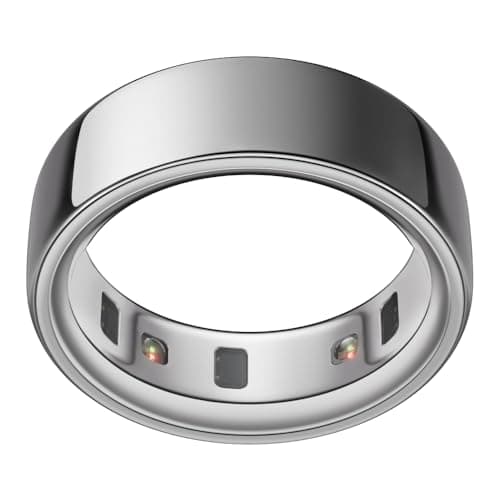
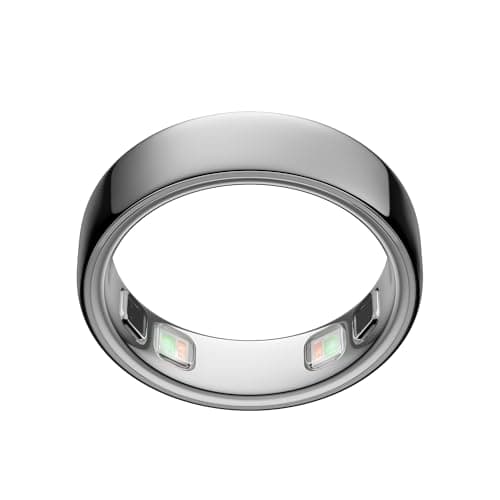
Oura Ring 5
Membership required5.8/10ResearchedThe only ring family with peer-reviewed PSG comparisons behind it. If the point is data a clinician might take seriously, this is the line with the papers - at the cost of a membership for as long as you wear it.
$399.00Amazon#ad · Price as of October 11, 2026 · How we make money for the link to Oura Ring 5
Best overall with no subscription
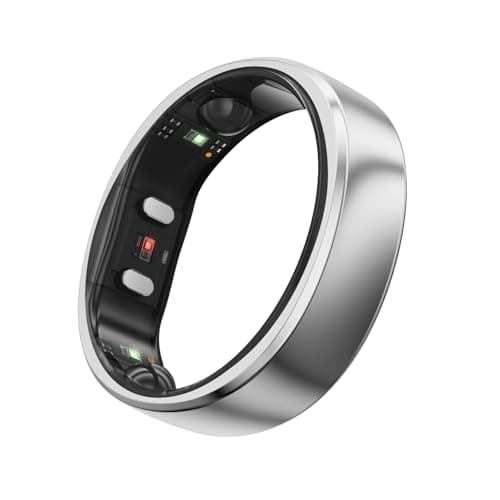
RingConn Gen 2
No subscription8.2/10ResearchedThe no-fee choice for a long trend: 10-12 days a charge plus the charging case, and RingConn names automatic sleep apnea monitoring with its own 90.7% figure. Nothing behind a paywall.
$299.00Amazon#ad · Price as of October 11, 2026 · How we make money for the link to RingConn Gen 2
Best way to track sleep with nothing on your body
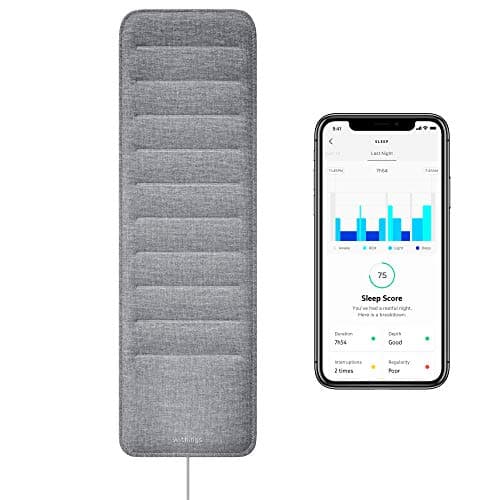
Withings Sleep
No subscription7.7/10ResearchedA mat under the mattress on mains power, reporting sleep stages, heart rate, respiratory rate, snoring and breathing disturbances with no required fee. Withings also makes the prescription-only, FDA-cleared Sleep Rx.
$199.95Amazon#ad · Price as of October 11, 2026 · How we make money for the link to Withings Sleep
Home sleep tests sit in between
There is a middle tier that consumer roundups usually skip: cleared home tests. Withings' Sleep Rx mat was cleared by the FDA for obstructive sleep apnea and is prescription-only, supplied through healthcare professionals (AASM, Sleep Review, Withings Health Solutions). That is the device class to ask your doctor about if a lab night is impractical. The consumer Withings Sleep is the same shape without the clearance.
The under-mattress category more broadly, including what each one charges, is on best under-mattress sleep trackers.
Taking ring data to a doctor
A ring is genuinely useful in an appointment if you bring the right thing. Bring six weeks, not six nights. Bring the boring numbers - bedtime, wake time, total sleep, resting heart rate - rather than the proprietary score, because no clinician has a reference range for a brand's readiness index. Say what you did differently in the weeks that look different. And say which device it came from, because the answer to “is this reliable?” depends entirely on that.
What you should not do is bring a stage breakdown and expect it to be read. Four-stage accuracy around 53% in a clinical lab is not a number anyone can treat on. Oura itself is explicit that no Oura ring feature is FDA-cleared (Oura).
Mistakes to avoid
- Cancelling a referral because the ring looks fine. A ring cannot see airflow. A normal-looking ring week does not rule out apnea.
- Believing the stage pie chart. It is the least reliable output on the screen.
- Comparing one night with a published average. The studies report group performance; individual nights vary much more.
- Assuming every ring inherits Oura's evidence. It does not transfer between brands, or even cleanly between generations.
- Letting the score decide how you feel. If a low number ruins your morning, check it weekly instead - the same advice we give on stress tracking.
How we scored this
How these picks were chosen
Every pick here is labeled Researched: chosen from each brand's fee policy, spec sheet, sizing and warranty pages, and the published studies that measured the ring (or its predecessor) against a chest strap, an ECG or a sleep lab, then scored on a public rubric. Every figure links to where it came from, and maker performance numbers are labeled “maker's claim,” so you can see exactly what you're paying for before you buy.
Scores are editorial judgments built from that documented research. Commissions never set a score or decide a pick. The rubric and its weights are published.
What changed
- Published.
Questions
Frequently asked
Can a smart ring replace a sleep study?
Is any smart ring accurate enough for a doctor to use?
What does a sleep study measure that a ring cannot?
Is there an FDA-cleared home sleep apnea device I can buy?
Should I wear a ring after a sleep study?
Receipts
Sources
- Khan et al., OTO Open 2025: Oura Ring vs medical-grade sleep studies, meta-analysis (PMC12602993) (checked 2026-09-19)
- Herberger et al., Scientific Reports 2025: finger ring trackers in the clinical sleep lab (PMC11923143) (checked 2026-09-19)
- Svensson et al., Sleep Medicine 2024: Oura Gen3 vs multi-night ambulatory polysomnography (checked 2026-09-19)
- Jin et al., J Translational Medicine 2026: finger-worn devices for sleep staging and apnea, meta-analysis (PMC13348430) (checked 2026-09-19)
- Robbins et al., Sensors 2024: three wearables for sleep tracking vs PSG (funded by Oura; PMC11511193) (checked 2026-09-19)
- Altini & Kinnunen, Sensors 2021: multi-sensor sleep staging with the Oura Ring (PMC8271886) (checked 2026-09-19)
- de Zambotti et al., Behavioral Sleep Medicine 2019: the Oura sleep tracker vs PSG (PMC6095823) (checked 2026-09-19)
- American Academy of Sleep Medicine: FDA clears Sleep Rx mat for OSA diagnosis (checked 2026-09-26)
- Sleep Review: FDA clears under-mattress mat for home sleep apnea screening (Sept 2024) (checked 2026-09-26)
- Withings Health Solutions: Sleep Rx (FDA-cleared, prescription, via healthcare professionals) (checked 2026-09-26)
- Withings US: Sleep under-mattress tracking mat (sensors, metrics, dimensions, power, app, subscription FAQ) (checked 2026-09-26)
- Oura blog: what the new FDA wellness guidance means (Feb 10, 2026) (checked 2026-09-19)
- RingConn: Gen 2 product page (checked 2026-09-19)
- Oura: Oura Ring 5 store page (battery, water rating, sizes, HSA/FSA) (checked 2026-09-19)
Every figure on this page is traceable. Fees come from each brand's own policy pages (with the date we checked), specs from maker pages and listings, and accuracy claims from named, published studies. Hardware prices are set by Amazon and change daily, so we link them live instead of printing them. Read the full method.