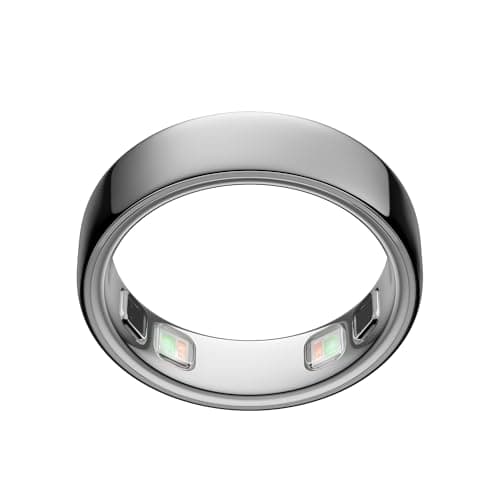
The contenders
Side by side
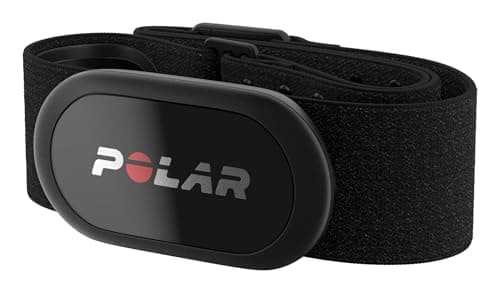
Buy this to check a ring
Polar H10
8.6/10The criterion device in Dial et al., the one peer-reviewed ring-versus-chest-strap study we found. Coin cell rated around 400 hours, Bluetooth, ANT+ and 5 kHz, and it stores a session of up to 30 hours on its own.
$104.45Amazon#ad · Price as of November 4, 2026 · How we make money for the link to Polar H10
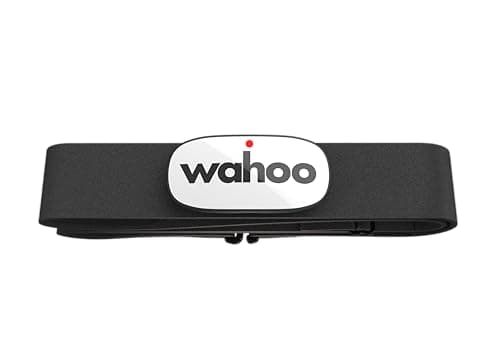
Buy this if you hate coin cells
Wahoo TRACKR Heart Rate
6.6/10Rechargeable over USB-C with over 100 hours claimed, Bluetooth and ANT+, IPX7. The catch: HRV needs a compatible third-party app, because Wahoo's own app and bike computers do not record it.
$97.75Amazon#ad · Price as of November 4, 2026 · How we make money for the link to Wahoo TRACKR Heart Rate
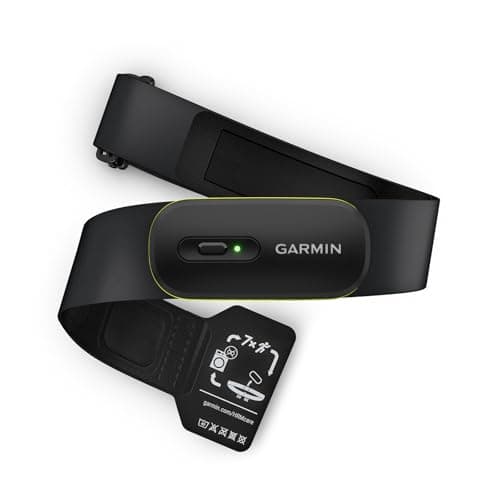
The third option for Garmin users
Garmin HRM 600
7.6/10Rechargeable, up to two months a charge (maker's claim), records a session on its own and feeds HRV straight into Garmin Connect. Two strap sizes, so measure first.
$157.69Amazon#ad · Price as of November 4, 2026 · How we make money for the link to Garmin HRM 600
The one difference that matters
Dial et al. (Physiological Reports, 2025) compared consumer wearables for nocturnal heart rate and HRV across 536 nights in 13 adults, and the paper states plainly that the Polar H10 was used as the criterion measurement. That is why the H10 shows up on this site constantly: when you want to know whether your ring's number is real, the most defensible thing you can do is reproduce the research setup rather than invent your own.
The Wahoo TRACKR is a capable strap. It is not that strap. If your purpose is anything other than auditing a ring - riding, running, a gym class - that distinction stops mattering almost entirely.
Published specs
| Published spec | Polar H10 | Wahoo TRACKR Heart Rate | Garmin HRM 600 |
|---|---|---|---|
| Battery | CR 2025 coin cell; about 400 hours (maker's claim) | Rechargeable lithium-ion over USB-C; "over 100 hours" in normal conditions (maker's claim) | Rechargeable lithium-ion; up to 2 months at 1 hour a day (maker's claim) |
| Connectivity | Bluetooth, ANT+ and 5 kHz | Bluetooth and ANT+ | — |
| Memory | Stores one training session of up to 30 hours | — | Records activity on its own and syncs afterward |
| Water resistance | WR30 | IPX7 | 5 ATM |
| HRV | — | HRV "with a compatible app"; Wahoo's own app and bike computers don't display or record HRV (per a Wahoo support answer) | — |
| US availability | Listed on Amazon.com | Listed on Amazon.com | Listed on Amazon.com |
The HRV catch on the Wahoo
This is the detail that decides the comparison for most people reading this site. Wahoo lists HRV support “with a compatible app” - and per a Wahoo support answer, Wahoo's own app and bike computers do not display or record HRV at all. The strap transmits the beat-to-beat intervals; something else has to catch them.
In practice that means buying or subscribing to a third-party HRV app on top of the strap, which is a small ongoing cost on a site built around avoiding exactly those. Polar's position is cleaner: the H10 transmits over Bluetooth and ANT+ simultaneously with both connections on by default, Polar recommends its own free Flow app but says other applications work, and Polar advertises compatibility with over 150 fitness apps.
Coin cell against USB-C
The H10 runs on a CR 2025 coin cell rated at about 400 hours. That is a year of twice-weekly sessions on a battery that costs a couple of dollars at any supermarket, with no cable and nothing to remember - but it does eventually need replacing, and that means prising the pod open.
The TRACKR charges over USB-C and Wahoo claims over 100 hours per charge in normal conditions. Nothing to buy, nothing to prise - but something else on the nightly charging pile. If the whole appeal of a smart ring was fewer things to charge, be honest with yourself about which of those two you will actually keep on top of. Garmin's HRM 600 sits between them: rechargeable, but with a claim of up to two months per charge, and it is compared with the H10 in detail on Polar H10 vs Garmin HRM 600.
Recording without a phone
Polar states the H10 stores one training session of up to 30 hours on the strap itself. That is more useful than it sounds for the ring-checking job: you can start a session, go to sleep or go out without a phone, and sync afterwards. Wahoo does not state a session memory for the TRACKR, so plan on having a phone or a head unit in range.
Fit, strap sizes and the chafing question
Chest straps have one genuine comfort problem and it is almost always a fit problem rather than a product problem. A strap that is loose rides down and loses contact; a strap that is dry at the electrodes reads badly for the first ten minutes of a session. Both failures look like a broken sensor and neither is.
Polar sells the H10 with a choice of straps across a wide range of chest sizes, which matters if you are at either end of the scale - the Pro Strap is listed from 60 cm up to 114 cm depending on the version, with a Soft Strap option in the middle of that range. Polar rates the H10 at WR30 for water resistance; Wahoo lists the TRACKR at IPX7. For the purposes of sweat and rain, both are fine; neither is a swimming device in the way a ring is.
Practical habits that fix most complaints: wet the electrodes before putting the strap on, wash it regularly rather than letting salt build up, and position it just below the chest muscles rather than high on the ribs. None of that is brand-specific, and all of it matters more than the choice between these two.
Using either to audit a ring
The protocol does not change with the strap. Take a five-minute reading at the same time each morning for two weeks, log rMSSD in whichever HRV app you use, and plot it against the ring's overnight HRV for the night before. You are comparing the direction of two lines, not the absolute values - the measurement windows are different and the numbers should not match. The full step-by-step version, including what counts as agreement, is on test your ring against a chest strap.
What that exercise will not settle is sleep staging; for that you would need a lab, which we cover on smart ring vs a sleep study. The strap settles heart rate and HRV, and those are the two numbers a ring is most often wrong about during the day.
Which one to buy
If you are buying a strap because of something you read on this site - to check a ring, to hold a ring's HRV claim to account - buy the Polar H10. It is the reference device, it needs no charging and it records on its own. If you already ride with Wahoo gear and want one fewer coin cell in your life, the TRACKR is a fine strap, as long as you have an HRV app lined up to catch what Wahoo's own software will not. Our full strap ranking is on best chest strap for HRV.
In detail
The contenders, in full
Buy this to check a ring
Polar H10
The criterion device in Dial et al., the one peer-reviewed ring-versus-chest-strap study we found. Coin cell rated around 400 hours, Bluetooth, ANT+ and 5 kHz, and it stores a session of up to 30 hours on its own.
Published specsResearched · every value sourced
| Used as a study reference | Criterion device in Dial et al., Physiological Reports 2025 ("The Polar H10 was used as the criterion measurement") |
|---|---|
| Battery | CR 2025 coin cell; about 400 hoursMaker's claim |
| Connectivity | Bluetooth, ANT+ and 5 kHz |
| Memory | Stores one training session of up to 30 hours |
| Water resistance | WR30 |
| US availability | Listed on Amazon.com |
How the 8.6 score breaks down
- Reference-grade evidence (30%)
- 10
- HRV & app support (25%)
- 8
- Connectivity (15%)
- 9
- Battery & charging (15%)
- 8
- Fit & comfort (15%)
- 7
What the specs support
- The reference device in the one peer-reviewed ring-vs-chest-strap study we found
- Bluetooth and ANT+, so it pairs with phones, watches and gym gear
- Coin-cell battery rated around 400 hours: no charging
- Can store one session on its own, so you don't need a phone nearby
Where it falls short
- Coin cell needs replacing eventually
- A chest strap is less comfortable to sleep in than a ring, so it's a checking tool, not a replacement
Skip this if…
…You'd rather never swap a coin cell: Garmin's HRM 600 is rechargeable.
#ad · Price as of November 4, 2026 · How we make money for the link to Polar H10
Buy this if you hate coin cells
Wahoo TRACKR Heart Rate
Rechargeable over USB-C with over 100 hours claimed, Bluetooth and ANT+, IPX7. The catch: HRV needs a compatible third-party app, because Wahoo's own app and bike computers do not record it.
Published specsResearched · every value sourced
| Battery | Rechargeable lithium-ion over USB-C; "over 100 hours" in normal conditionsMaker's claim |
|---|---|
| Connectivity | Bluetooth and ANT+ |
| HRV | HRV "with a compatible app"; Wahoo's own app and bike computers don't display or record HRV (per a Wahoo support answer) |
| Water resistance | IPX7 |
| US availability | Listed on Amazon.com |
How the 6.6 score breaks down
- Reference-grade evidence (30%)
- 5
- HRV & app support (25%)
- 6
- Connectivity (15%)
- 9
- Battery & charging (15%)
- 8
- Fit & comfort (15%)
- 7
What the specs support
- Rechargeable over USB-C: no coin cells
- Bluetooth and ANT+
- Over 100 hours per charge (maker's claim)
Where it falls short
- HRV needs a third-party app; Wahoo's app won't record it
- No session memory stated by Wahoo
- Not the reference device in the published ring studies
Skip this if…
…You want to check HRV inside the strap maker's own app: Wahoo's app doesn't record it.
#ad · Price as of November 4, 2026 · How we make money for the link to Wahoo TRACKR Heart Rate
The third option for Garmin users
Garmin HRM 600
Rechargeable, up to two months a charge (maker's claim), records a session on its own and feeds HRV straight into Garmin Connect. Two strap sizes, so measure first.
Published specsResearched · every value sourced
| Sensing | Real-time heart rate and heart rate variability |
|---|---|
| Battery | Rechargeable lithium-ion; up to 2 months at 1 hour a dayMaker's claim |
| Water resistance | 5 ATM |
| Memory | Records activity on its own and syncs afterward |
| Strap sizes | XS-S and M-XL |
| US availability | Listed on Amazon.com |
How the 7.6 score breaks down
- Reference-grade evidence (30%)
- 6
- HRV & app support (25%)
- 8
- Connectivity (15%)
- 8
- Battery & charging (15%)
- 9
- Fit & comfort (15%)
- 8
What the specs support
- Rechargeable: no coin cells
- Stores a session and syncs later, so a phone can stay in the locker
- Two strap sizes
Where it falls short
- Not the device used in the published ring studies (the Polar H10 was)
- Garmin-centric features work best with a Garmin watch or bike computer
Skip this if…
…Your only goal is to match the published research setup: that was a Polar H10.
#ad · Price as of November 4, 2026 · How we make money for the link to Garmin HRM 600
How we scored this
How these picks were chosen
Every pick here is labeled Researched: chosen from each brand's fee policy, spec sheet, sizing and warranty pages, and the published studies that measured the ring (or its predecessor) against a chest strap, an ECG or a sleep lab, then scored on a public rubric. Every figure links to where it came from, and maker performance numbers are labeled “maker's claim,” so you can see exactly what you're paying for before you buy.
Scores are editorial judgments built from that documented research. Commissions never set a score or decide a pick. The rubric and its weights are published.
What changed
- Published.
Questions
Frequently asked
Is the Polar H10 better than the Wahoo TRACKR?
Does the Wahoo TRACKR measure HRV?
How long does the Polar H10 battery last?
Do I need a chest strap if I have a smart ring?
Receipts
Sources
- Polar: H10 heart rate sensor product page (checked 2026-09-19)
- Polar: H10 user manual, technical specifications (checked 2026-09-19)
- Polar US: H10 heart rate sensor store page ("Water resistance: WR30"; "Memory One session, up to 30 hours"; Pro Strap XS-S 60-68 cm, M-XXL 68-87 cm and XXXL 82-114 cm, Soft Strap M-XXL 65-96 cm; "Up to 400h"; "the most accurate sensor in Polar's history"; "When others want to validate the accuracy of their devices, they use Polar H10"; compatibility with "over 150" fitness apps) (checked 2026-10-16)
- Polar: H10 user manual, getting started ("To get started with your Polar H10, pair it with the Polar Flow app first"; "the H10 transmits your heart rate signal simultaneously via Bluetooth and ANT+" and "both connections are set on by default"; "It is recommended to use the Polar Flow app but it is also possible to use other applications") (checked 2026-10-16)
- Wahoo: TRACKR heart rate chest strap monitor page (checked 2026-09-19)
- Garmin: HRM 600 product page (checked 2026-09-19)
- Garmin: HRM 600 owner's manual, specifications (checked 2026-09-19)
- Dial et al., Physiological Reports 2025: nocturnal resting HR and HRV in consumer wearables vs Polar H10 (checked 2026-09-19)
- Amazon search results for "Polar H10 heart rate sensor" (listing titles) (checked 2026-09-19)
- Amazon search results for "Wahoo TRACKR heart rate monitor" (listing titles) (checked 2026-09-19)
Every figure on this page is traceable. Fees come from each brand's own policy pages (with the date we checked), specs from maker pages and listings, and accuracy claims from named, published studies. Hardware prices are set by Amazon and change daily, so we link them live instead of printing them. Read the full method.