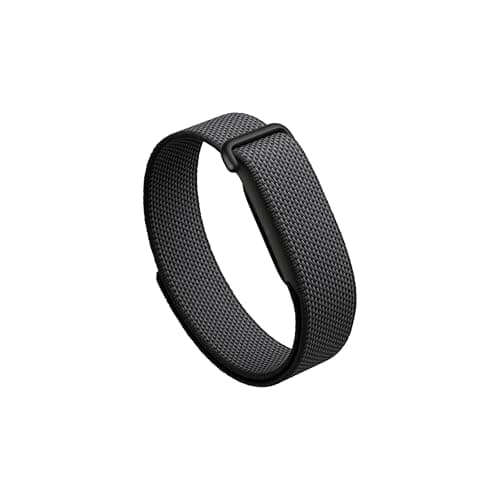
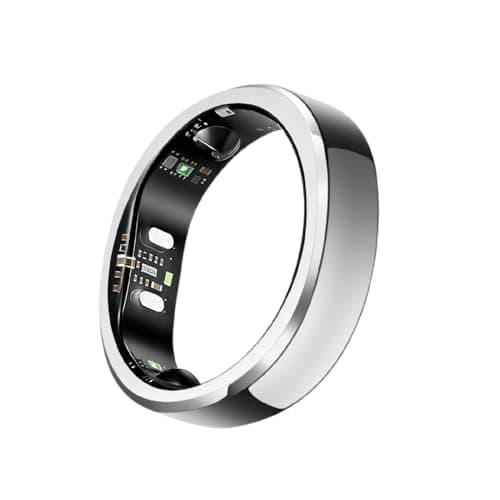
The contenders
Side by side
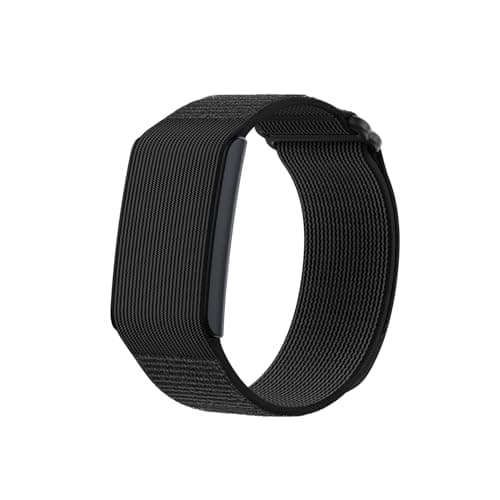
More battery, no size to guess
Amazfit Helio Strap
No subscription9.1/10Ten days claimed against four, one strap that fits wrists from 145 to 205 mm, and a product page that carries no subscription footnote at all.
$99.00Amazfit Helio Strap#ad · Price as of November 6, 2026 · How we make money for the link to Amazfit Helio Strap
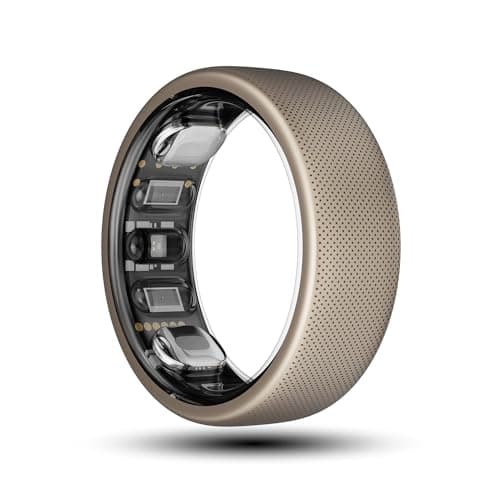
If it has to be a ring
Amazfit Helio Ring
No subscription8.9/10A titanium ring rated 10 ATM with temperature and cycle tracking, in sizes 8, 10 and 12 only, and four days a charge with blood oxygen switched off.
$165.72Amazfit Helio Ring#ad · Price as of November 6, 2026 · How we make money for the link to Amazfit Helio Ring
The verdict
These two are easy to confuse. They share a brand, a phone app, a screenless design and a marketing line about not needing a subscription. Amazfit sells them as two routes to the same thing: recovery, sleep and heart-rate data without a monthly bill. For the buyer this site is built for - someone who wants to own the hardware outright - that shared starting point is exactly why the differences matter, because once the fee is off the table the decision comes down to the parts people usually skim.
The fee: close, but not identical
Both products are sold as subscription-free, and in the sense that matters - you can buy either one and read your own data without paying again - both claims hold. But the two Amazfit product pages do not say the same thing, and the difference is worth 30 seconds of your time.
The Helio Strap page says “No required subscription” and carries no qualifying footnote anywhere on it (Amazfit).
The Helio Ring page leads with “No Subscriptions Required” - and then carries footnote 3: “Readiness insights require subscription to Zepp Aura.” The same page describes Zepp Aura as “now free for Amazfit Helio Ring users” (Amazfit). So the ring's headline feature sits behind a plan that the brand currently gives away.
Battery: four days against ten, and read the fine print on both
This is the single biggest gap between them, and it is wider than the headline numbers suggest once you read how each figure was reached.
Amazfit claims “Up to 10 days of battery life with typical use” for the strap, from a “232 mAh (rated value)” cell. For the ring it claims “Up to 4 days” - and states the conditions: that is Amazfit's “Typical Usage Scenario” with heart rate, assisted sleep and stress monitoring on and blood oxygen off. Turn blood oxygen on, which is one of the reasons people buy a recovery tracker, and the published figure no longer describes what you are running.
Neither device has a charging case, so neither has a reserve to fall back on. The ring charges from a wireless charger in a “Theoretical Charging Duration” of “Approx. 1 hour, 40 minutes.” The strap ships with a “Magnetic charging head (no cable)” - the USB-C cable is not in the box, which is a small, genuinely annoying detail to discover on day one.
Four days means charging roughly twice a week, every week, for as long as you own it. Ten means charging about three times a month. If you have ever stopped wearing a tracker because charging it became a chore, that gap is the whole decision. For how both compare with the rest of the market, our smart ring battery life guide reads every maker's claim with its own fine print attached.
The sizing problem only one of them has
The Helio Ring is made in sizes 8, 10 and 12 only. Not a range with gaps - three sizes, two apart. If your finger measures a 9, an 11, a 7 or a 13, Amazfit does not make a ring that fits you, and no amount of wanting one changes that. Rings on this site that do serve those fingers run 6-14 (RingConn Gen 2) or 6-15 (RingConn Gen 3), with a free sizing kit.
The strap removes the problem outright. One size, 22 mm wide, hook-and-loop fastening, rated for wrists from 145 to 205 mm. There is nothing to measure before you buy and nothing to exchange if you get it wrong.
This also changes what happens when your body does. Fingers swell in heat, on long flights and across a pregnancy; a ring that fit in March can be uncomfortable in July. A hook-and-loop strap adjusts in a second. Our smart ring sizing guide covers how to measure properly if you are set on the ring anyway.
What each one actually measures
Both cover the core recovery set. Amazfit lists the strap as reporting “heart rate variability, sleep, blood oxygen, stress, exertion, and fitness level” plus resting heart rate, VO2 max, training load, training effect and recovery time, with “over 50 sports modes available through the Zepp App.” The ring lists readiness, sleep stages and naps, sleep breathing quality, sleep HRV and resting heart rate, SpO2, stress, PAI, menstrual cycle tracking and four sports modes.
Three differences are worth knowing before you choose:
- Temperature. The ring carries temperature-based features; the strap has a temperature sensor but, per the published specs, skin temperature is not offered as a metric. If overnight temperature trends are why you are buying, that points at the ring.
- Cycle tracking. Listed for the ring, not for the strap.
- Offline storage. The strap holds “up to 21 days of offline heart-rate storage,” so a weekend away from your phone is not a lost weekend of data. Amazfit publishes no equivalent figure for the ring.
Neither has GPS. Both work with iPhone and Android through the Zepp App, though the minimum versions differ slightly - iOS 15.0 and above for the strap, iOS 14.0 and above for the ring, with Android 7.0 and above for both. On water, the ring is the tougher one: 10 ATM cited to a watch standard (ISO 22810:2010) against the strap's 5 ATM, which Amazfit says “is not intended for diving or high-pressure water activities.”
One honest note on the strap's sports modes: Amazfit's own page says “over 50” while the Amazon listing title says 27. We could not reconcile the two, so we print both rather than pick the flattering one.
Side by side
Every figure above is the maker's own, taken from Amazfit's product pages and linked to the page it came from. Our scores come from the published rubric on the methodology page, where three-year cost of ownership carries 30% and published accuracy evidence carries 25%.
What the published evidence covers: nothing, for either
We looked for validation of both devices against a reference - an ECG, a chest strap or polysomnography - and found none for either product. That is not a claim that they are inaccurate. It means nobody independent has checked and published the result, so there is no number anyone can point you to.
It is worth being precise about how unusual that is not. Among the no-fee devices this site covers, published validation is the exception rather than the rule: the RingConn Gen 2 has a chest-strap preprint of its own, and that is close to the whole list. The brand with the real research record is Oura, which charges a membership for most of its insights - the trade this entire site exists to lay out, and even there the record stops at the bedroom door: nobody has published a workout accuracy figure for an Oura ring either. If evidence is what you are optimizing for, start at what every published smart ring study actually found.
Which one to buy
Buy the Helio Strap if: you want the longest gap between charges of anything on this site, you do not want to measure a finger, you travel or train away from your phone, or you are replacing a Whoop and want the same shape without the membership. Our full Helio Strap write-up has the detail.
Buy the Helio Ring if: you will not sleep in a wrist device, your finger is a size 8, 10 or 12, and you want temperature trends or cycle tracking. The Amazfit Helio Ring review covers it in full, and Amazfit Helio vs RingConn Gen 2 is the comparison to read next if the three-size limit is a problem - because it is the one that solves it.
Buy neither if: published accuracy evidence is your first criterion. In that case the honest answer is a ring with a research record and a fee, or a no-fee ring with a longer battery and a wider size range - both routes are ranked in the best smart rings without a subscription.
In detail
The contenders, in full
More battery, no size to guess
Amazfit Helio Strap
Ten days claimed against four, one strap that fits wrists from 145 to 205 mm, and a product page that carries no subscription footnote at all.
Published specsResearched · every value sourced
How the 9.1 score breaks down
- Cost of ownership (3 years) (30%)
- 9.7
- Evidence of accuracy (25%)
- 8.0
- Battery (claimed) (15%)
- 9.5
- Sizing & fit (10%)
- 9.5
- Data ownership (10%)
- 9.0
- Platform support (10%)
- 9.7
What the specs support
- No required subscription, and the strap page makes no Zepp Aura claim at all
- Claimed ten days a charge, which is longer than any wrist device on this site
- No screen and no ring size: it adjusts to any wrist from 145 to 205 mm
- 21 days of offline heart-rate storage, so a night away from your phone isn't a lost night
- Works with iPhone and Android, and is rated 5 ATM
Trade-offs
- No published study of this device against an ECG, a chest strap or a sleep lab - we looked
- The box has a magnetic charging head but no USB-C cable, so you supply the cable
- No GPS, so outdoor runs and rides borrow your phone's location
- A Zepp account is required, which puts your health data on Amazfit's platform
- No skin-temperature metric, which rings at this price do offer
Good to know
Consider another pick if you want published validation, or you want the device itself to record a route: the Helio Strap has no GPS and no study behind it.
#ad · Price as of November 6, 2026 · How we make money for the link to Amazfit Helio Strap
If it has to be a ring
Amazfit Helio Ring
A titanium ring rated 10 ATM with temperature and cycle tracking, in sizes 8, 10 and 12 only, and four days a charge with blood oxygen switched off.
Published specsResearched · every value sourced
How the 8.9 score breaks down
- Cost of ownership (3 years) (30%)
- 9.7
- Evidence of accuracy (25%)
- 8.0
- Battery (claimed) (15%)
- 8.5
- Sizing & fit (10%)
- 8.2
- Data ownership (10%)
- 9.0
- Platform support (10%)
- 9.7
What the specs support
- No required subscription, from a brand that sells watches in every US electronics aisle
- The cheapest ring on this site from a maker that publishes specs, sizing and a support line
- A 10 ATM rating cited to a watch standard (ISO 22810:2010) and a named test report, which is a clearer basis than an IP rating quoted with a depth
- Works on iPhone and Android, and syncs to Apple Health, Google Fit and Strava
Trade-offs
- "Up to 4 days" is the shortest battery claim of any ring we cover, and there is no charging case to fall back on
- Only three sizes (8, 10, 12), so whole groups of fingers are simply not served
- We found no published validation of the Helio Ring against a chest strap, an ECG or a sleep lab
- Amazfit's own footnote puts readiness insights behind Zepp Aura, a plan the brand currently bundles free - a condition it controls, not you
Good to know
Consider another pick if your finger is not a size 8, 10 or 12, or you want more than four days between charges: RingConn's rings run 10-12 days and come in sizes 6-14.
#ad · Price as of November 6, 2026 · How we make money for the link to Amazfit Helio Ring
How we scored this
How these picks were chosen
Every pick here is labeled Researched: chosen from each brand's fee policy, spec sheet, sizing and warranty pages, and the published studies that measured the ring (or its predecessor) against a chest strap, an ECG or a sleep lab, then scored on a public rubric. Every figure links to where it came from, and maker performance numbers are labeled “maker's claim,” so you can see exactly what you're paying for before you buy.
Scores are editorial judgments built from that documented research. Commissions never set a score or decide a pick. The rubric and its weights are published.
Questions
Frequently asked
Is the Amazfit Helio Strap better than the Helio Ring?
Do the Helio Strap and Helio Ring both need a subscription?
Do they use the same app?
Which one is more accurate?
Does the Helio Ring come in my size?
Receipts
Sources
- Amazfit US: Helio Strap product page ("No required subscription" and "with no required monthly subscription"; battery "Up to 10 days of battery life with typical use" and in the FAQ "Up to 10 days under typical usage conditions" from a "232 mAh (rated value)" cell; "up to 21 days of offline heart-rate storage"; "5 ATM water resistance" and "It is not intended for diving or high-pressure water activities"; dimensions without sensor "33.97 x 24.3 x 10.59mm", weight "20g", strap width "22mm", wrist size "145-205mm", "Hook & loop fastening"; "Magnetic charging head (no cable)" and a USB-C cable listed as not included; packing list of "Smart band & strap (assembled)", magnetic charging head and manual; supported devices "Android 7.0 and above, iOS 15.0 and above" through the "Zepp App"; it "works with both iPhone and Android devices through the Zepp App"; metrics named as "heart rate variability, sleep, blood oxygen, stress, exertion, and fitness level" plus resting heart rate, VO2 max, training load, training effect and recovery time; "over 50 sports modes available through the Zepp App"; no Zepp Aura footnote anywhere on the page) (checked 2026-10-30)
- Amazon search results for "Amazfit Helio Strap" (listing title "Amazfit Helio Strap Screenless Activity Tracker, 10-Day Battery, iOS/Android | Subscription Free, 24/7 Activity & Sleep Tracker with Heart Rate, 27 Sports Modes, Strength Training, Hyrox Race", showing In Stock when checked) (checked 2026-10-30)
- Gadgets & Wearables technical specs: Amazfit Helio Strap (sensors listed as accelerometer, gyroscope, optical heart rate, SpO2, temperature and a vibration motor; "Rechargeable battery; 232 mAh" with "Up to 10 days" and a "Magnetic charging head"; "5 ATM"; "20 g"; "33.97 x 24.3 x 10.59 mm"; "Bluetooth Yes (5.2 BLE)" with no Wi-Fi, NFC, cellular or GPS; HRV, stress, blood oxygen, respiration rate and sleep listed as supported while skin temperature is listed as not; smartphone compatibility "Android 7.0+ and iOS 15.0+"; release date "2025-06") (checked 2026-10-30)
- Amazfit US: Helio Ring product page ("No Subscriptions Required"; battery "Up to 4 days" in the "Typical Usage Scenario" with heart rate, assisted sleep and stress monitoring on and blood oxygen off; "Theoretical Charging Duration" of "Approx. 1 hour, 40 minutes" on a wireless charger; cell capacity 16.5 mAh at size 8, 18.5 mAh at size 10 and 20.5 mAh at size 12; "10 ATM" per ISO 22810:2010 with advice to remove it for hot showers and saunas; sizes 8, 10 and 12 at 3.65-3.82 g, 8 mm wide and 2.6 mm thick; titanium alloy outer ring with a resin inner ring; BioTracker PPG sensor, temperature sensor, EDA sensor, 3-axis accelerometer and gyroscope; readiness, sleep stages, sleep breathing quality, sleep HRV and RHR, SpO2, stress, PAI; Zepp App on "Android 7.0 and above, iOS 14.0 and above"; Zepp Aura "now free for Amazfit Helio Ring users" and Zepp Fitness "totally free for Amazfit Helio Ring users", with footnote 3 stating "Readiness insights require subscription to Zepp Aura"; packing list of ring, wireless charger and manual) (checked 2026-10-23)
- Amazon search results for "Amazfit Helio Ring" (listing titles: "Amazfit Helio Smart Ring, Monitor Sleep/Heart, Water-Resistant, iOS/Android | Subscription Free, Titanium Alloy, Fast 1.4-Hr Charging ... Size Before You Buy", sold as separate size 8, size 10 and size 12 listings, all showing In Stock when checked) (checked 2026-10-23)
- RingConn: Gen 2 product page (checked 2026-09-19)
Every figure on this page is traceable. Fees come from each brand's own policy pages (with the date we checked), specs from maker pages and listings, and accuracy claims from named, published studies. Hardware prices are set by Amazon and change daily, so we link them live instead of printing them. Read the full method.