What a sleep lab measures
Polysomnography - the reference standard - records electrical activity in the brain (EEG), eye movement (EOG) and muscle tone (EMG), plus airflow, chest effort and blood oxygen. Sleep stages are defined by those signals. REM is identified partly by eye movement and muscle atonia; deep sleep by slow waves in the EEG. None of those signals reaches a finger.
That is the whole reason this question is interesting. A ring is not a worse version of a sleep lab; it is a different instrument inferring the lab's output from proxies. We set out what the lab adds that nothing at home can on smart ring vs a sleep study.
What a ring actually reads
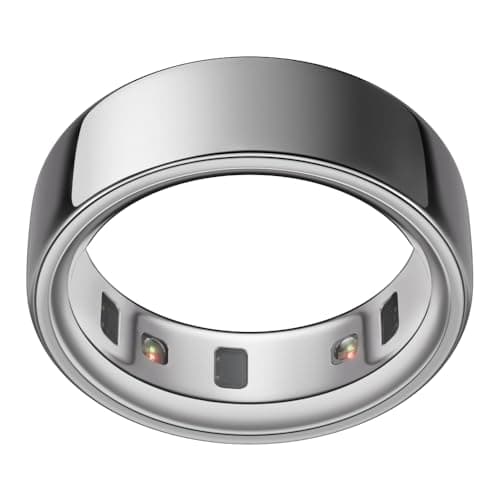
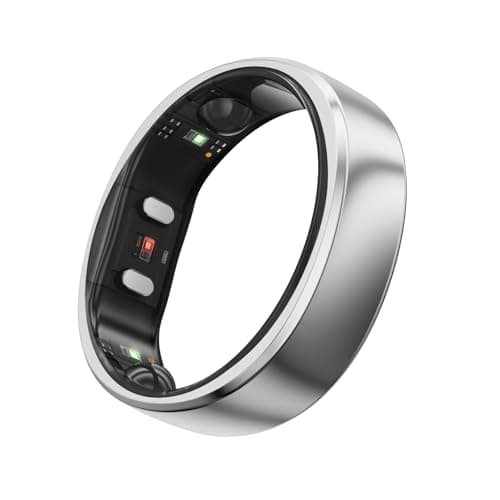
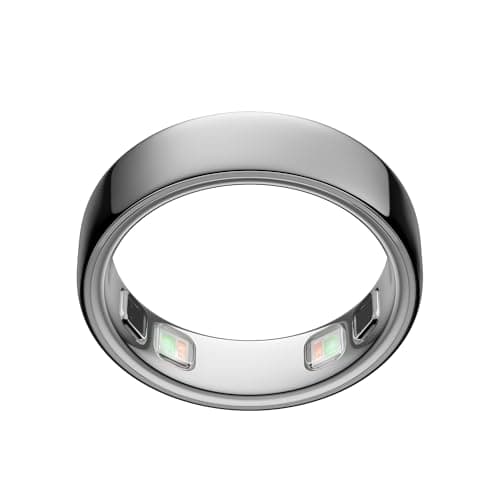
- Photoplethysmography. Green and infrared LEDs shine into the finger, a photodiode measures what comes back, and the fluctuation gives a pulse waveform. From that comes heart rate, beat-to-beat intervals (and so HRV), respiration rate inferred from the way breathing modulates the pulse, and - from red and infrared ratios - an estimate of blood oxygen.
- Accelerometry. How much you moved, and when. Long still periods are the backbone of every sleep/wake algorithm ever written, going back to wrist actigraphy decades before rings existed.
- Skin temperature. A finger thermistor, reported as deviation from your own baseline. Temperature follows a circadian rhythm, which helps the model anchor the night.
A finger is a good place to do this. There is a lot of blood flow close to the surface, the hand is usually still, and the ring is in firm contact without a strap. That is why ring sleep data tends to look better in studies than wrist data from the same night.
How the model turns that into stages
The algorithm works in epochs - typically 30-second windows, the same unit a sleep technician scores. For each window it has features: mean heart rate, heart rate variability, movement count, respiration rate, temperature trend, and where in the night the window falls. A classifier trained on nights where both ring data and polysomnography were recorded maps those features onto wake, light, deep and REM.
The physiological logic behind it is real. Heart rate drops and HRV rises in deep sleep. REM brings a more variable heart rate and near-absent movement. Awake periods show movement and a higher, steadier pulse. Altini and Kinnunen (Sensors, 2021) published the multi-sensor version of this for the Oura Ring, and it is the clearest public account of how a ring gets from a pulse to a hypnogram.
Two consequences follow. First, the model is only as good as the nights it was trained on - which is why validation in unusual populations, or on daytime and fragmented sleep, is much thinner than validation on ordinary overnight sleep. Second, a brand can change your past by shipping a new algorithm; the sensor did not change, the interpretation did.
How good the result is
We go through each study - sample size, reference device, who funded it - on smart ring sleep tracking accuracy. The short practical reading: trust the duration, treat the stage percentages as a rough texture rather than a measurement, and never make a health decision from one night.
What to look for in a sleep tracker
- Published validation of that device or its direct predecessor, preferably not funded by the brand.
- Whether the nightly detail is paywalled. A sleep score you can see and a hypnogram you cannot is a worse product than it looks.
- Nights per charge. A sleep tracker that is charging at bedtime tracks nothing.
- Whether it suits your bed. If you will not wear anything, the question moves to under-mattress devices instead.
Our picks for this job
What we'd track sleep with
One ring with the evidence, one with no fee, and one device for people who will not wear anything at all.
Best evidence, if you'll pay the membership
Oura Ring 5
Membership required5.8/10ResearchedThe only ring family repeatedly compared with polysomnography in peer-reviewed work. Most of the nightly detail requires the membership.
$399.00Amazon#ad · Price as of November 4, 2026 · How we make money for the link to Oura Ring 5
Longest battery with no subscription
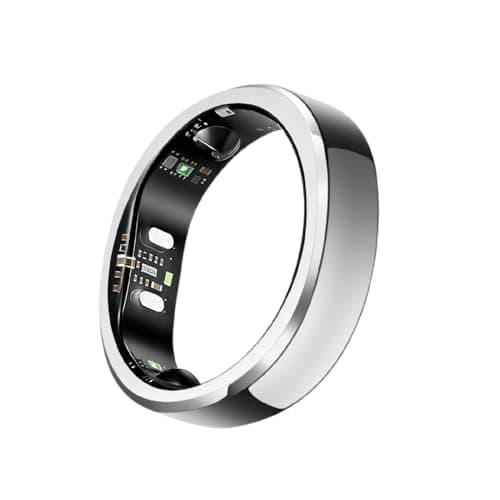
RingConn Gen 3
No subscription8.1/10ResearchedSleep stages, heart rate and temperature with no subscription and up to 14 days a charge. Thinner published evidence than Oura.
$349.00Amazon#ad · Price as of November 4, 2026 · How we make money for the link to RingConn Gen 3
Best way to track sleep with nothing on your body
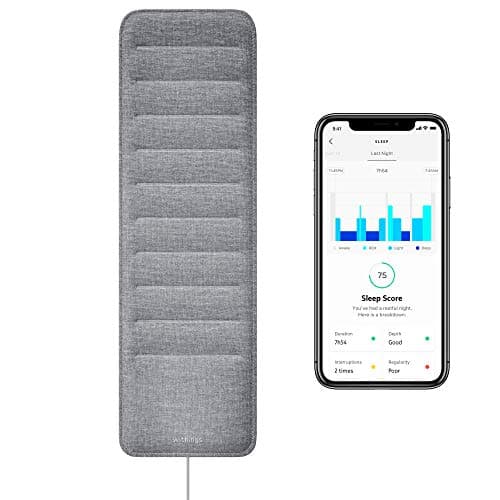
Withings Sleep
No subscription7.7/10ResearchedA 5 mm mat under the mattress: sleep cycles, heart rate, respiratory rate and snoring with nothing to wear and no required fee.
$199.95Amazon#ad · Price as of November 4, 2026 · How we make money for the link to Withings Sleep
Getting a better reading
- Fit matters more than brand. A loose ring gives a noisy pulse signal, and a noisy pulse signal degrades every number the model builds on top. Our fit guide covers how tight is right.
- Wear it on the same finger every night. Different fingers give different signal quality - see which finger to wear a smart ring on.
- Give it two weeks before judging anything. Every one of these systems is baseline-relative.
- Watch total sleep time, not stage percentages. It is the number with the best evidence behind it.
Mistakes people make
- Believing the hypnogram is a measurement. It is a model output. The pulse and the movement are the measurements.
- Comparing stage percentages between brands. Different models, different training data, different answers from the same night.
- Using a ring to self-diagnose. None of these devices is diagnostic. Snoring with pauses in breathing is a clinical question - see smart rings and sleep apnea.
- Chasing deep sleep. Optimising a number your device infers rather than measures is a good way to sleep worse.
How we scored this
How these picks were chosen
Every pick here is labeled Researched: chosen from each brand's fee policy, spec sheet, sizing and warranty pages, and the published studies that measured the ring (or its predecessor) against a chest strap, an ECG or a sleep lab, then scored on a public rubric. Every figure links to where it came from, and maker performance numbers are labeled “maker's claim,” so you can see exactly what you're paying for before you buy.
Scores are editorial judgments built from that documented research. Commissions never set a score or decide a pick. The rubric and its weights are published.
What changed
- Published.
Questions
Frequently asked
How does a smart ring know I'm asleep?
Can a smart ring detect REM sleep?
Are smart rings more accurate than watches for sleep?
Why did my sleep stages change after an app update?
Receipts
Sources
- Altini & Kinnunen, Sensors 2021: multi-sensor sleep staging with the Oura Ring (PMC8271886) (checked 2026-09-19)
- de Zambotti et al., Behavioral Sleep Medicine 2019: the Oura sleep tracker vs PSG (PMC6095823) (checked 2026-09-19)
- Svensson et al., Sleep Medicine 2024: Oura Gen3 vs multi-night ambulatory polysomnography (checked 2026-09-19)
- Robbins et al., Sensors 2024: three wearables for sleep tracking vs PSG (funded by Oura; PMC11511193) (checked 2026-09-19)
- Herberger et al., Scientific Reports 2025: finger ring trackers in the clinical sleep lab (PMC11923143) (checked 2026-09-19)
- Khan et al., OTO Open 2025: Oura Ring vs medical-grade sleep studies, meta-analysis (PMC12602993) (checked 2026-09-19)
- Jin et al., J Translational Medicine 2026: finger-worn devices for sleep staging and apnea, meta-analysis (PMC13348430) (checked 2026-09-19)
- Oura: Oura Ring 5 store page (battery, water rating, sizes, HSA/FSA) (checked 2026-09-19)
- RingConn: Gen 3 product page (checked 2026-09-19)
- Withings US: Sleep under-mattress tracking mat (sensors, metrics, dimensions, power, app, subscription FAQ) (checked 2026-09-26)
Every figure on this page is traceable. Fees come from each brand's own policy pages (with the date we checked), specs from maker pages and listings, and accuracy claims from named, published studies. Hardware prices are set by Amazon and change daily, so we link them live instead of printing them. Read the full method.